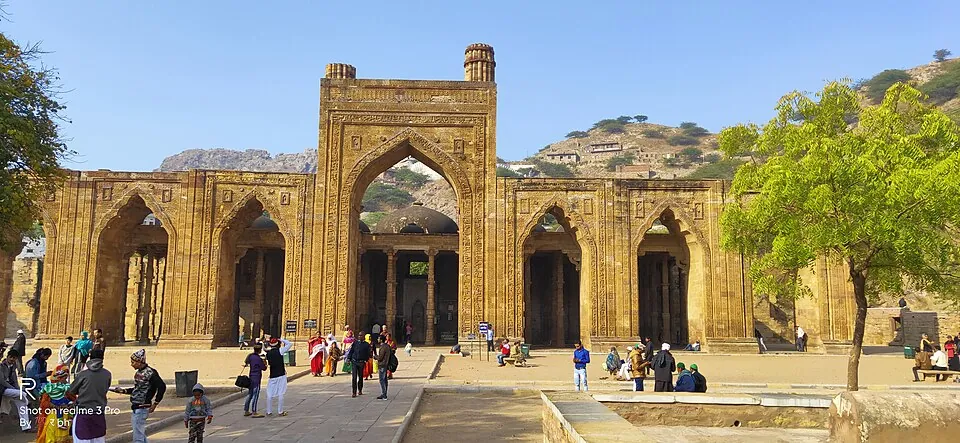
Aḍhāī Din kā Jhoṃprā at Ajmer
Aḍhāī Din kā Jhoṃprā · अढ़ाई दिन का झोंपड़ा
Commissioned by Qutb al-Dīn Aibak around 1192 and completed in 1199, this mosque in Ajmer is one of India's oldest. Built largely by local craftsmen, it uses reused temple materials and shows early Indo-Islamic design. Iltutmish later added a screen of arches.
The Aḍhāī Din kā Jhoṃprā, whose name means 'hut of two and a half days', is a former mosque in the city of Ajmer, Rajasthan, and the oldest surviving monument in the city. Qutb al-Dīn Aibak ordered it around 1192 CE, and its designer is named as Abū Bakr of Herāt. Construction was finished in 1199, and in 1213 the Delhi sultan Iltutmish enhanced it with a monumental screen of pointed arches covered in Qurʾānic and decorative calligraphy. Historians note that some building material came from older Hindu and Jain temples that had stood nearby, and that most of the work was done by Hindu masons under the supervision of foreign architects, so the structure shows a meeting of traditions in stone carving and layout. A forest of pillars supports its prayer hall, with ornament that combines geometric forms and local motifs. The name has inspired legends about being built in a very short time, but these are folk explanations and not documented fact. The building is now a protected monument, valued as an early example of the Indo-Islamic style that later flowered in Delhi and beyond.
Sources
- Adhai Din Ka Jhonpra Wikipedia · CC-BY-SA-4.0
- Q14547483 Wikidata · CC0-1.0