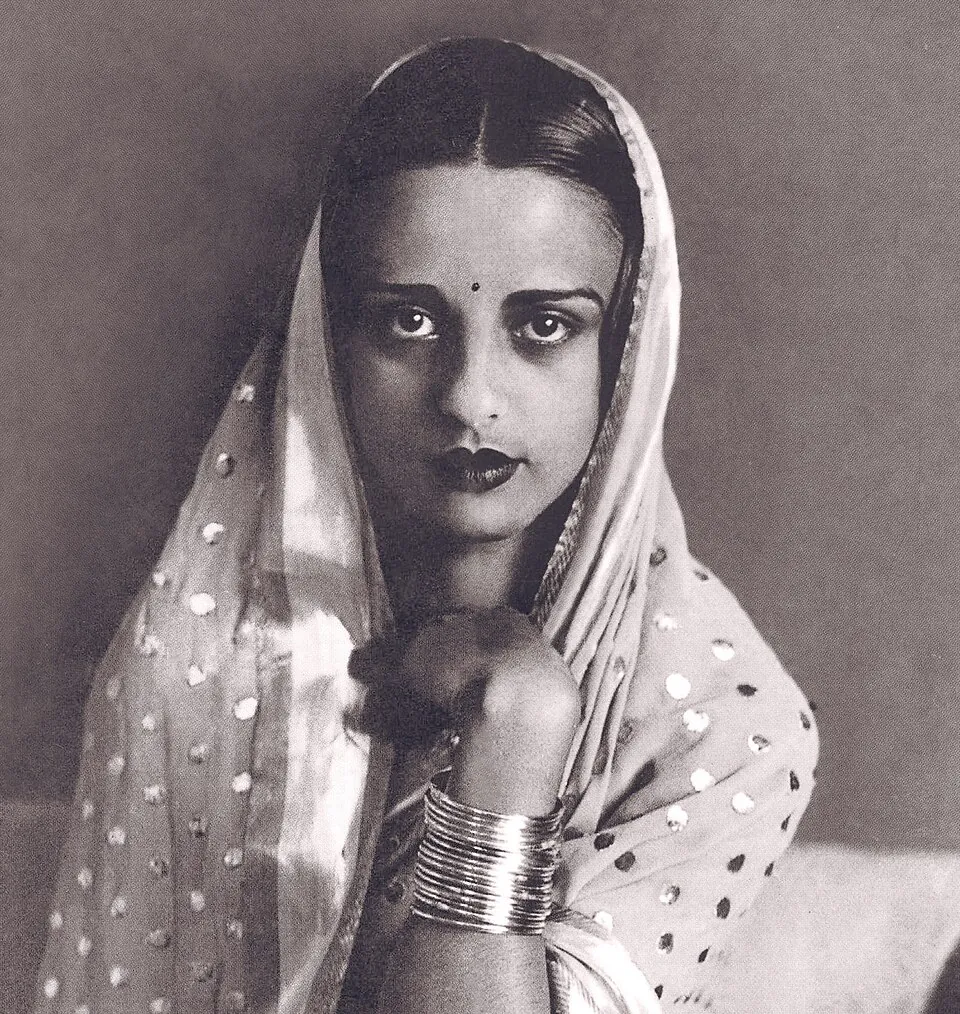
Amrita Sher-Gil and the Birth of Modern Indian Painting
Amṛtā Śer-Gil · अमृता शेरगिल
Amrita Sher-Gil, a Hungarian-Indian painter born in 1913, became a pioneer of modern Indian art. Recognised at nineteen for her 1932 painting Young Girls, she settled in India in 1934 and drew on Indian miniature and cave painting, depicting ordinary lives, until her early death in 1941.
Amrita Sher-Gil was born in Budapest in 1913 to a Sikh father and a Hungarian mother. She began painting early and took formal lessons from the age of eight. In Paris she studied at the École des Beaux-Arts and absorbed the lessons of post-impressionists such as Gauguin and Cézanne. Her oil painting Young Girls, from 1932, brought her recognition at nineteen. She came to India in 1934 and felt a strong pull towards Indian subjects, turning to rural life, village women and the poor, painted with warm earthen colours and flattened forms inspired by Mughal and Pahari miniatures and the Ajanta murals. Works such as Three Girls, Bride's Toilet and South Indian Villagers from the middle of the 1930s show this synthesis. Critics have called her one of the great avant-garde women artists of the early twentieth century and a founder of modern Indian art. She died in Lahore in December 1941, aged twenty-eight, leaving a small but influential body of work. The year 1935 marks her first mature phase in India, and her paintings are national art treasures.
Sources
- Amrita Sher-Gil Wikipedia · CC-BY-SA-4.0
- Q150312 Wikidata · CC0-1.0