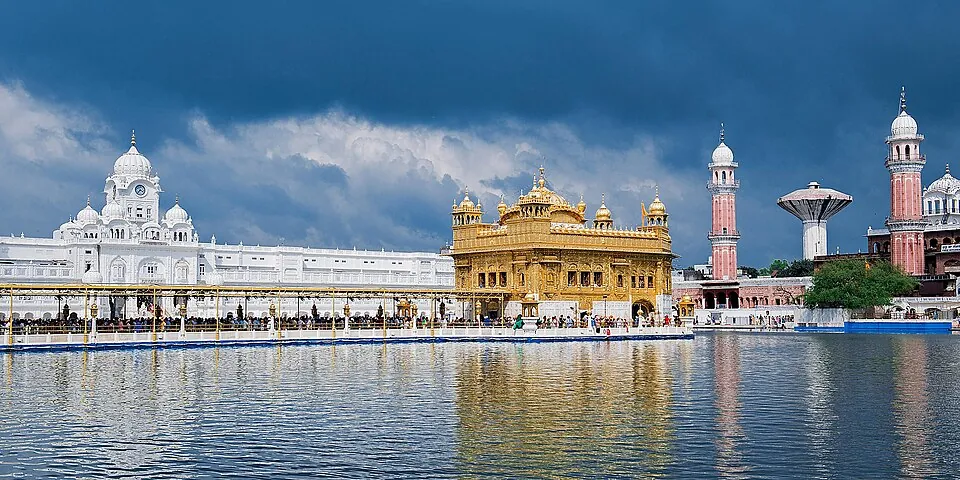
Amritsar Takes Shape Around the Sacred Pool
Harimandir Sāhib · ਹਰਿਮੰਦਰ ਸਾਹਿਬ
Amritsar, now the second-largest city of Punjab, traces its beginnings to the 1570s, when the Sikh Gurus developed a sacred pool and settlement there. Around that pool arose the Harmandir Sāhib, the spiritual centre of the Sikh faith, later completed in the early seventeenth century.
Amritsar lies in the Majha region of Punjab, about 28 kilometres from the border with Pakistan and some forty-seven kilometres east of Lahore. Today it is a large commercial and cultural centre, but its history began in the late sixteenth century, when the Sikh Guru Rām Dās founded a settlement around a pool in 1577. The tank, called the Amrit Sarovar, gave the town its name, meaning pool of nectar. Within the pool, a shrine took shape under his successor Guru Arjan, who had the Harmandir Sāhib built and installed the Ādi Granth there in 1604. The shrine has four doors, signalling welcome to people of every background. The city grew as a centre of trade and pilgrimage, and the Harmandir Sāhib, popularly the Golden Temple, became the most sacred site for Sikhs. The date shown marks the founding of the settlement; the temple itself was built and completed over the following decades. Amritsar remains the spiritual capital of Sikhism and a major tourist destination.