Aṅga, an Early Realm of Eastern India
Aṅga · अङ्ग
Aṅga was an ancient Indo-Aryan tribe and kingdom of eastern India, attested in the Iron Age. Buddhist texts such as the Aṅguttara Nikāya list it among the sixteen great realms, and the Jain Vyākhyāprajñapti also names it. Its people were called Āṅgeyas.
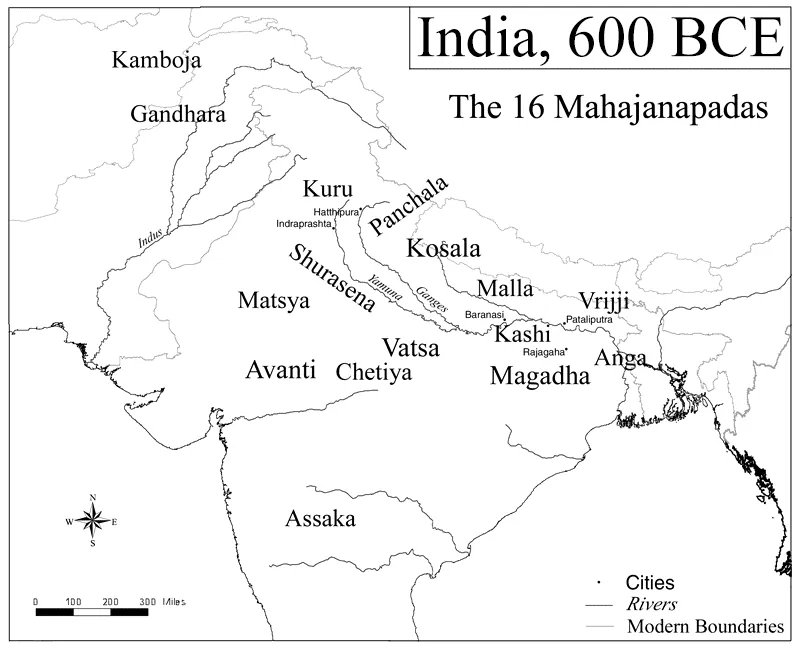
Aṅga was an ancient Indo-Aryan people and state in eastern South Asia, with a presence in the record from the Iron Age. Its members were called the Āṅgeyas. The realm is counted among the sixteen great nations, the mahājanapadas, in Buddhist sources such as the Aṅguttara Nikāya, and it also features in the list of janapadas given in the Jain Vyākhyāprajñapti. Geographically it lay in the lower Ganges plain, in the area of present eastern Bihar and neighbouring parts of Bengal, with its main city at Campā on the river of that name. Because it bordered Magadha, the two states were often at odds, and the Buddhist tradition records that Aṅga was eventually absorbed into the growing Magadhan realm in the sixth century BCE. Epic tradition remembers a ruler of Aṅga in the person of Karṇa, whom Duryodhana crowned king. As a tribal and political entity it illustrates the stage before large empires, when many smaller states competed along the great river routes, and the date given here is a scholarly approximation of its early prominence.