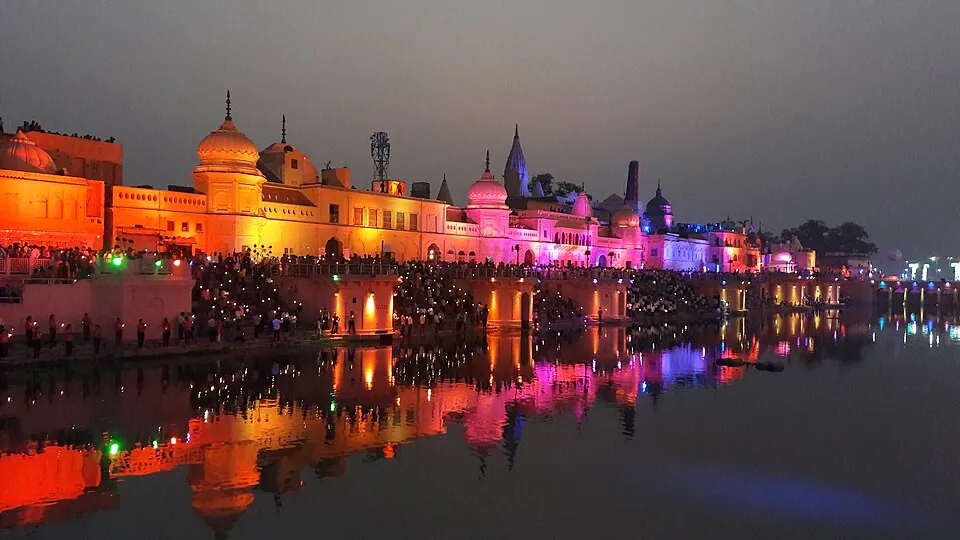
Ayodhyā, Capital of Kosala in Tradition and History
Ayodhyā · अयोध्या
Traditional Rāmāyaṇa-era reckoning; the historical city is attested later as Sāketa.
Ayodhyā on the Sarayū river is the city of the Rāmāyaṇa, birthplace of Rāma and capital of the Kosala kingdom in epic tradition. Historically it was known as Sāketa, visited by the Buddha and Mahāvīra, and called Ayodhyā from the Gupta period. Jain texts name it the birthplace of five tīrthaṅkaras.
Ayodhyā stands on the banks of the Sarayū in present-day Uttar Pradesh. In the Rāmāyaṇa and its many versions it is the capital of Kosala, the city of Daśaratha and the birthplace of Rāma. The epic dating used here follows a traditional reckoning and is part of sacred narrative. The historical picture is different. The settlement was long known as Sāketa, and early Buddhist and Jain canonical texts record visits by the Buddha and by Mahāvīra. Jain tradition names it as the birthplace of five tīrthaṅkaras, including Ṛṣabhanātha, and connects it with the legendary emperor Bharata. From the Gupta period sources use Ayodhyā and Sāketa for the same city, and the older name gave way to the epic one. Over the centuries it became a major pilgrimage centre for Hindus, with significance for Jains and Buddhists too. In recent years it has also grown into one of the most visited destinations in Uttar Pradesh. The timeline marks the city's place in epic tradition, not an archaeological founding date.