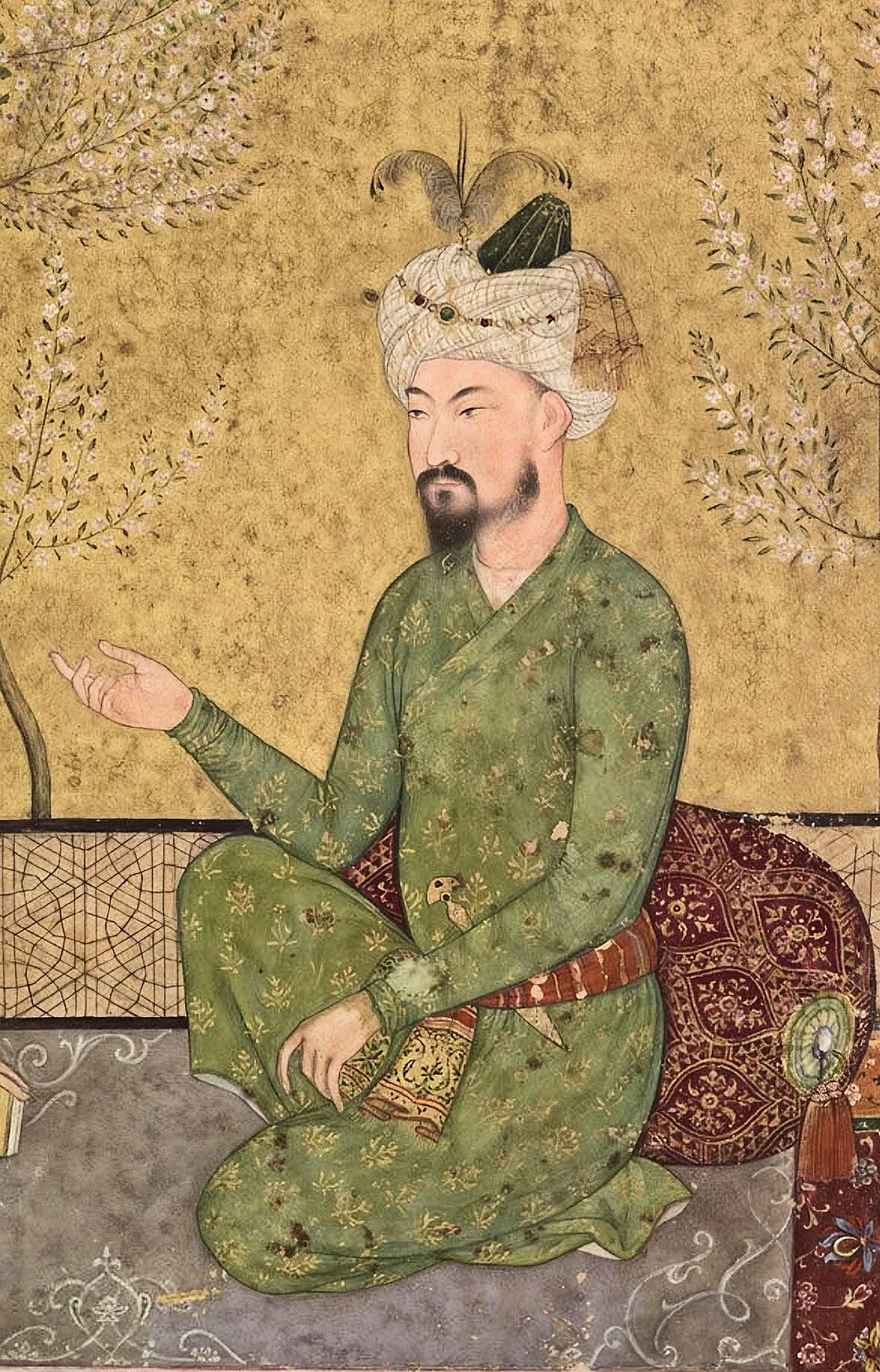
Bābur Founds the Mughal Empire
Bābur · बाबर
Bābur, a descendant of Timur and Genghis Khan born in Fergana, founded the Mughal Empire after defeating Ibrāhīm Lodī at Panipat in 1526. Having lost his Central Asian lands, he turned to India, and he is also remembered for his candid memoir, the Bāburnāma.
Zahīr-ud-Dīn Muḥammad Bābur was born in 1483 at Andijan in the Fergana Valley, in present-day Uzbekistan, the eldest son of the Timurid governor Umar Shaikh Mīrzā. Through his father he descended from Timur and through his mother from Genghis Khan. He became ruler of Fergana at the age of twelve and took Samarkand two years later, only to lose both. After years of struggle he established himself in Kabul, and from there looked towards northern India. In April 1526, at the First Battle of Panipat, he defeated Ibrāhīm Lodī, the last Delhi sultan, helped by artillery and tactics new to the region. The following year he overcame Rāṇā Sāṅgā at Khanwa, and in 1529 he defeated Afghan chiefs of the east. He died in Agra in 1530 and was given the posthumous name Firdaws Makānī, dwelling in paradise. His memoir, the Bāburnāma, written in Chagatai Turkish, is a rich account of his life, observations of people, plants and places. His descendants ruled much of India for over three centuries.