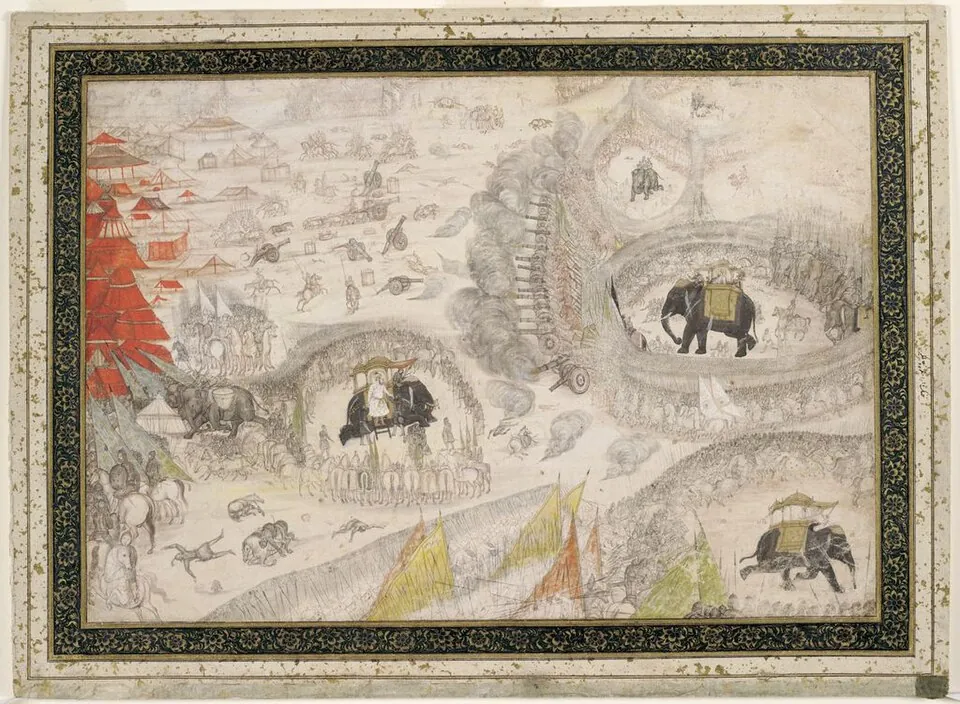
Aurangzeb Defeats Dārā Shikoh at Sāmūgaṛh
Sāmūgaṛh · सामूगढ़
The Battle of Sāmūgaṛh, fought on 29 May 1658, was a decisive clash in the Mughal war of succession among Shah Jahān's sons. Dārā Shikoh, the eldest and heir apparent, was defeated by his younger brothers Aurangzeb and Murād Bakhsh.
The war of succession of 1657 to 1659 began after the emperor Shah Jahān fell seriously ill in September 1657, and his four sons moved to claim the throne. The Battle of Sāmūgaṛh, also called Jang-e-Sāmūgaṛh, was fought on 29 May 1658 and is counted as the decisive engagement of that struggle. It was the second battle between Dārā Shikoh, the eldest son and recognised heir, and a combined force of two younger brothers: Aurangzeb, the third son, and Murād Bakhsh, the fourth. The outcome of the contest decided which of the sons would inherit the empire from their father. The fight took place near Agra, and the defeat of Dārā broke his cause and opened the way to Aurangzeb's seizure of the throne. Over the following months Aurangzeb removed his rivals one by one, imprisoned his father in the fort at Agra and was crowned emperor in 1658. The battle is therefore often treated as a turning point that shaped the Mughal state's later direction, as well as the character of Aurangzeb's long reign.
Sources
- Battle of Samugarh Wikipedia · CC-BY-SA-4.0
- Q4087464 Wikidata · CC0-1.0