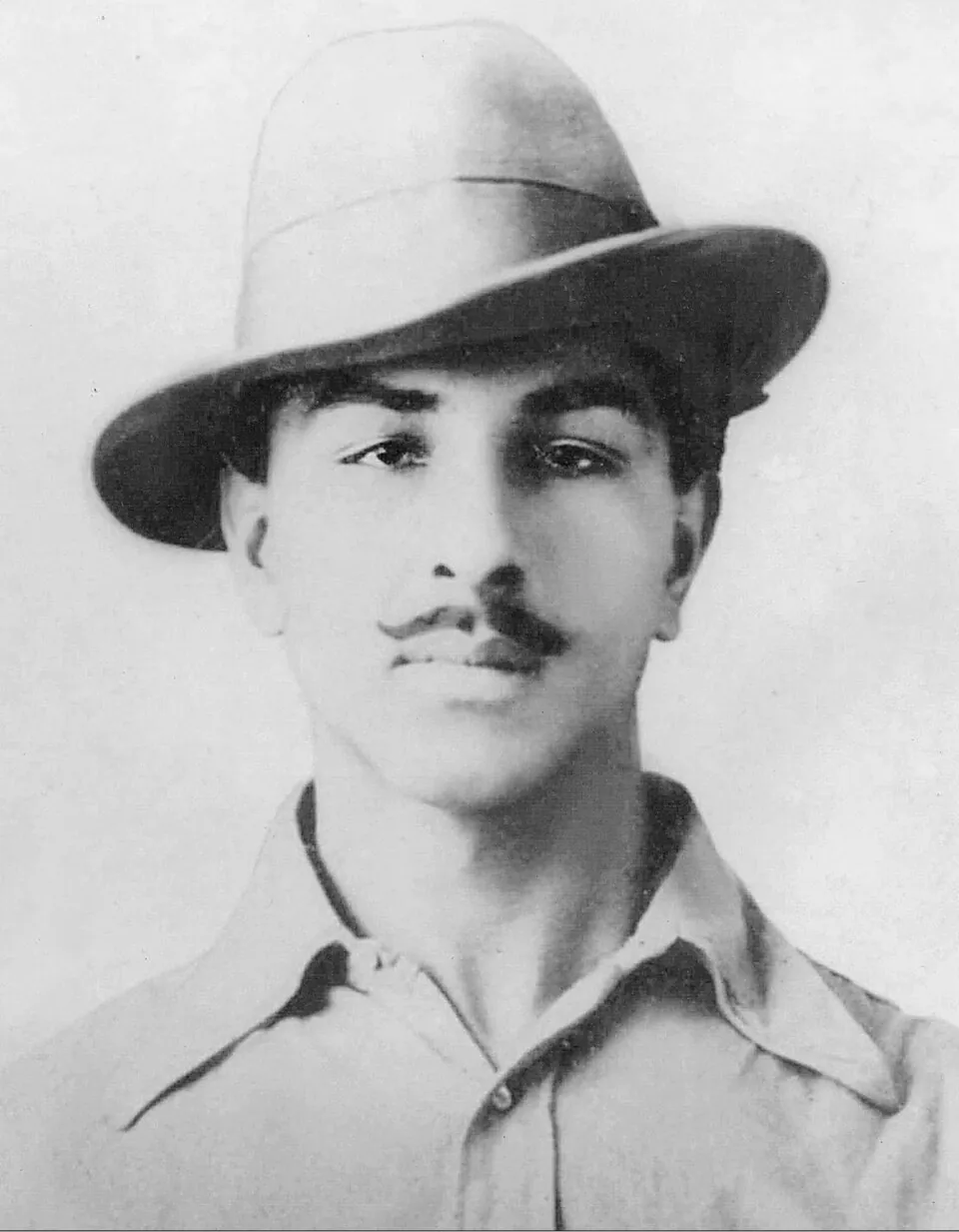
Bhagat Singh Is Hanged at Lahore
Bhagat Siṃh · भगत सिंह
Bhagat Singh, a young anti-colonial revolutionary, was executed on 23 March 1931 aged 23. He took part in the 1928 killing of a British police officer and a symbolic 1929 bombing in the Central Legislative Assembly. He became a revered martyr, admired across the political spectrum.
Bhagat Singh, born in 1907, was a revolutionary of the Hindustan Socialist Republican Association who opposed British rule. In December 1928 he and Shivaram Rajguru shot the young police officer John Saunders at Lahore, having mistaken him for the senior officer they blamed for the lathi charge that preceded the death of the nationalist leader Lala Lajpat Rai. In April 1929 he and Batukeshwar Dutt set off two low-intensity bombs in the Central Legislative Assembly in Delhi, threw leaflets and allowed themselves to be arrested. In prison he joined a hunger strike for better treatment of Indian prisoners, and sympathetic press coverage made him widely known in Punjab. He was convicted in the Saunders case and hanged on 23 March 1931, at the age of 23. Drawing on socialist and anarchist ideas, he had by then become an avowed atheist and socialist. His execution turned him into a martyr and popular legend across northern India, and Jawaharlal Nehru observed that he had become a symbol while the act itself was forgotten. Admirers in later years have ranged across the political spectrum.
Sources
- Bhagat Singh Wikipedia · CC-BY-SA-4.0
- Q377808 Wikidata · CC0-1.0