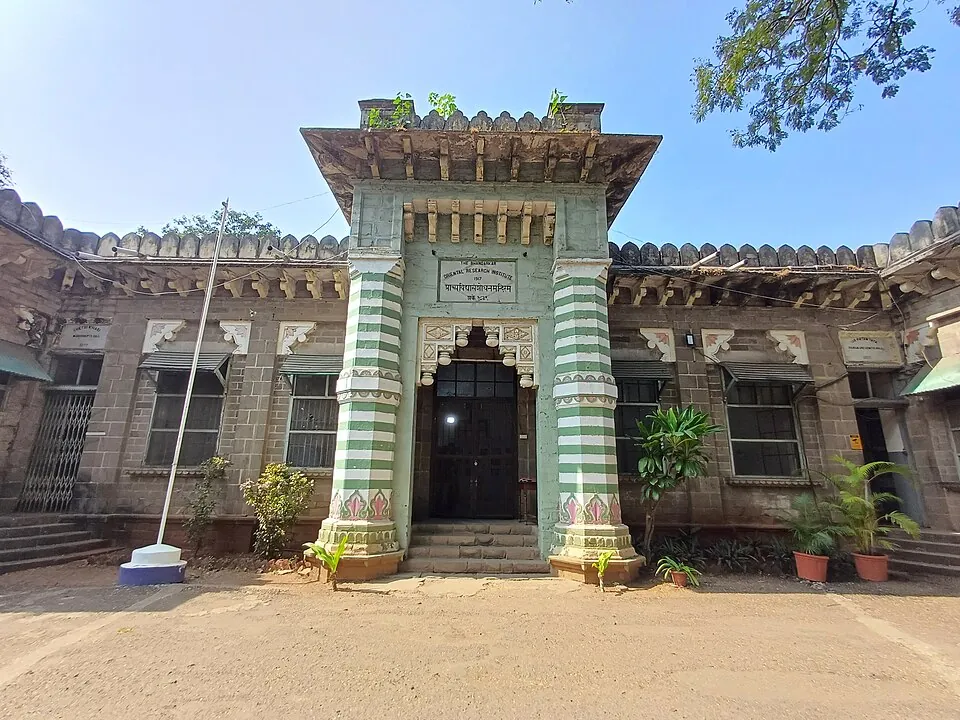
Bhandarkar Oriental Research Institute Opens in Pune
Bhāṇḍārakara Prācya Saṃśodhana Mandira · भांडारकर प्राच्यविद्या संशोधन मंदिर
The Bhandarkar Oriental Research Institute was founded in Pune on 6 July 1917 and named for the Sanskrit scholar Ramkrishna Gopal Bhandarkar. It holds a famous collection of Sanskrit and Prakrit manuscripts and later produced the critical edition of the Mahābhārata.
On 6 July 1917 scholars in Pune established an institute for oriental studies and named it after Ramkrishna Gopal Bhandarkar, who lived from 1837 to 1925 and was among the leading Indologists of his generation. The Bhandarkar Oriental Research Institute, often called BORI, was dedicated to the care, preservation and study of old manuscripts and rare books, with a particular focus on Indology. It became known for its holdings of Sanskrit and Prakrit manuscripts, many of them gathered from earlier government collections made in the nineteenth century and later donated to the institute. Its most celebrated project was the critical edition of the Mahābhārata, prepared by a team under V. S. Sukthankar and published in many volumes between 1933 and 1966, which compared manuscripts from across the subcontinent to reconstruct the oldest recoverable text. The institute also trained generations of scholars and published a long-running journal. Together with other bodies of the period, it shows how Indian scholars took charge of researching their own textual heritage.
Sources
- Bhandarkar Oriental Research Institute Wikipedia · CC-BY-SA-4.0
- Q3595113 Wikidata · CC0-1.0