Victoria Terminus Opens in Bombay
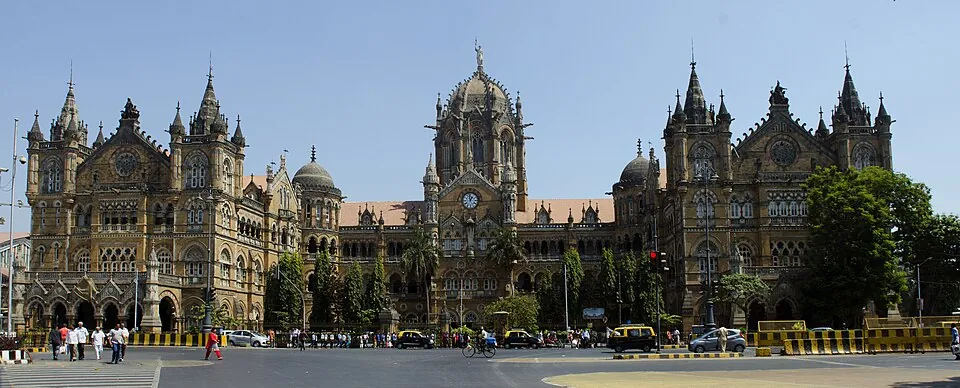
The railway terminus later renamed Chhatrapati Shivaji Terminus opened to the public in Bombay on 20 May 1888. Designed by F. W. Stevens building on a first scheme by Axel Haig, in a flamboyant Indo-Gothic manner, it is a UNESCO World Heritage Site.
Chhatrapati Shivaji Terminus, abbreviated CST, was originally called Victoria Terminus after the queen-empress. It is a railway station in Mumbai, then Bombay, and now a UNESCO World Heritage Site. The British architectural engineer Frederick William Stevens designed it, developing a first scheme by Axel Haig, and the result is a showy example of the Indo-Gothic style that mixes Victorian Gothic Revival forms with Indian decorative motifs and Mughal-influenced domes. Construction began in 1878 on a site south of the older Bori Bunder station and finished in 1887, which was also the year of the queen's fiftieth anniversary on the throne. Public use began on 20 May 1888. In March 1996 its official name was altered to honour Shivaji, the seventeenth-century Maratha king, and the 'Maharaj' was added later. The terminus symbolised the commercial importance of Bombay in the age of railways, and it continues to serve as one of the busiest stations in the country.
Sources
- Chhatrapati Shivaji Terminus Wikipedia · CC-BY-SA-4.0
- Q235884 Wikidata · CC0-1.0