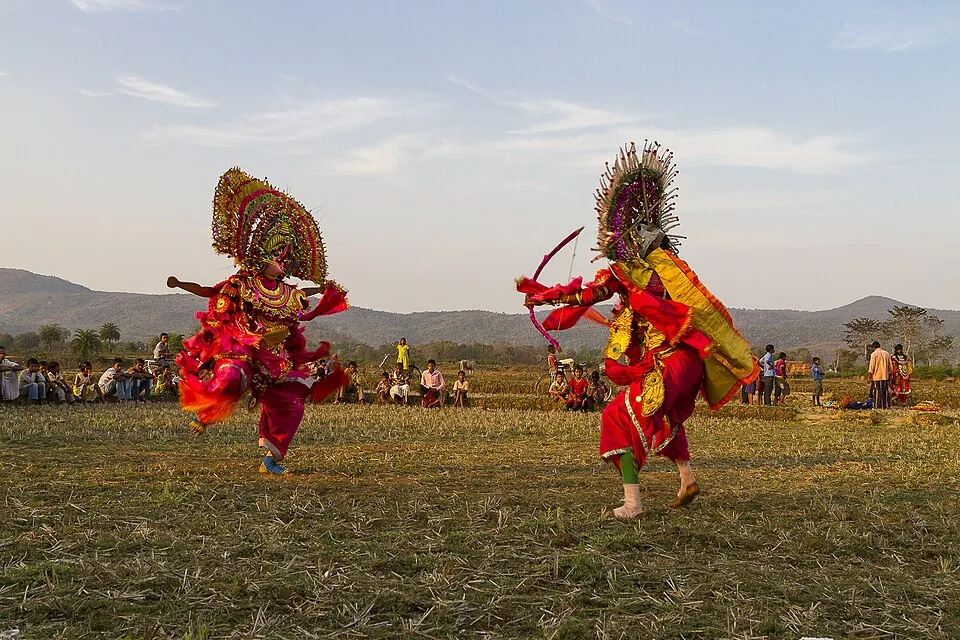
Chhau, the Martial Dance of Eastern India
Chau · छऊ
Chhau is a semi-classical dance of martial and folk origin, performed in three regional styles: Purulia in West Bengal, Seraikella in Jharkhand and Mayurbhanj in Odisha. Male troupes enact scenes from the epics and Puranas, and the Purulia and Seraikella styles use masks.
Chhau, also spelled Chhou, mixes martial movement, acrobatics and folk festivity with structured religious storytelling. It is found in three styles named for their home regions: Purulia Chhau in West Bengal, Seraikella Chhau in Jharkhand and Mayurbhanj Chhau in Odisha. Purulia and Seraikella dancers wear masks to mark out the characters. The repertoire draws on the Ramayana, the Mahabharata and the Puranas, with religious themes from Shaivism, Shaktism and Vaishnavism. Troupes are traditionally all male, and performances are celebrated each spring in the regions where it flourishes. Some scholars consider Chhau to be a syncretic form that emerged from older tribal and martial traditions. Its origins are not securely dated, so the year used here is only a loose marker for the period after independence, when the dance gained national and international attention and recognition as a classical-style stage art, while remaining rooted in village festival life.