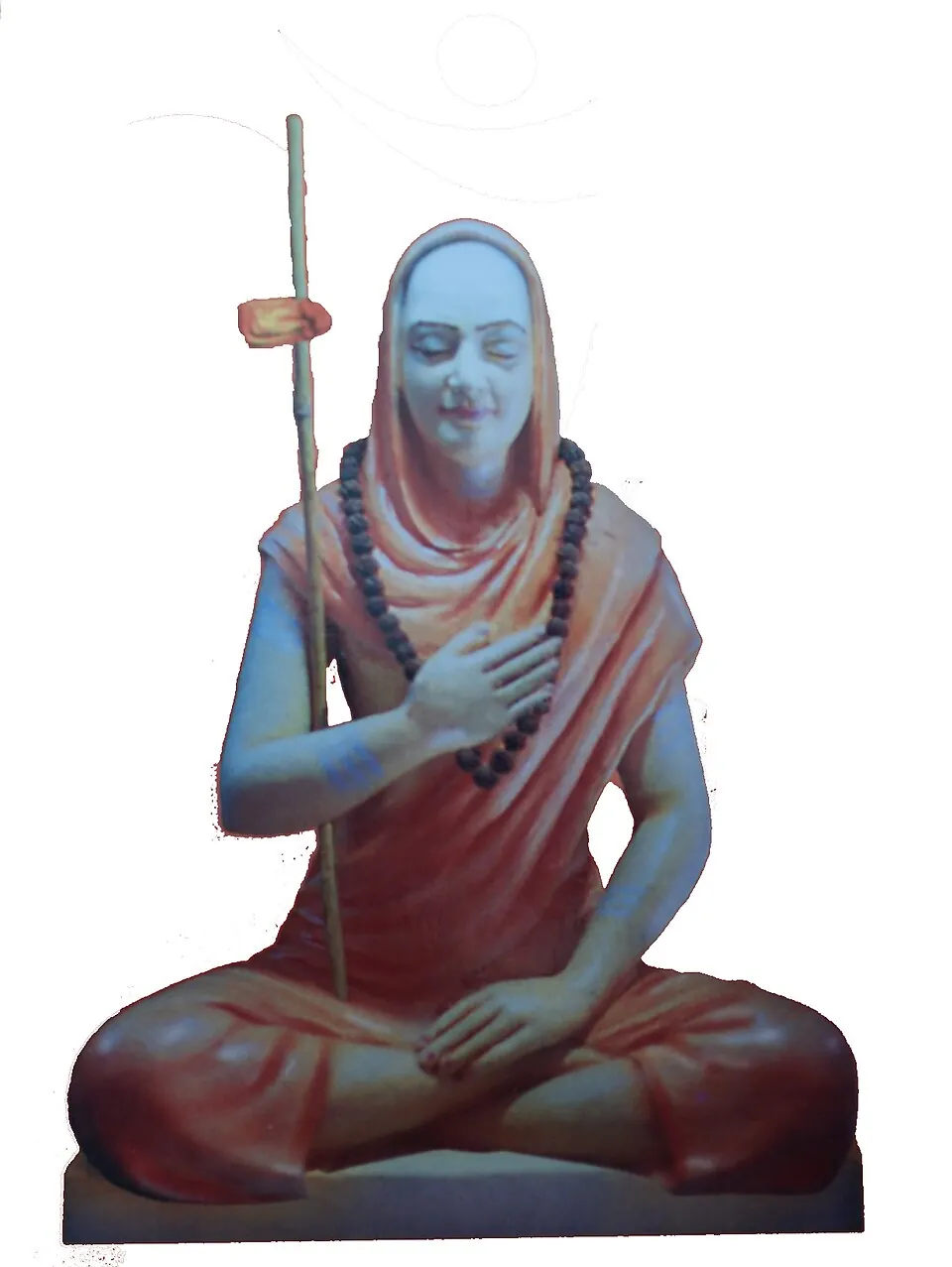
Gauḍapāda and the Māṇḍūkya Kārikā
Gauḍapāda · गौडपाद
Gauḍapāda, a teacher of the sixth or seventh century, is remembered as an early Advaita Vedānta thinker and author or compiler of the Māṇḍūkya Kārikā. Śaṅkara later called him paramaguru, the teacher of his own teacher. Little of his biography is known.
Gauḍapāda, also called Gauḍapādācārya, is regarded as an early medieval philosopher of Advaita Vedānta who flourished around the sixth century CE, though firm biographical details are lacking. He is credited with writing or assembling the Māṇḍūkya Kārikā, a verse commentary on the Māṇḍūkya Upaniṣad, in four chapters. The fourth chapter makes use of Buddhist vocabulary, which shows that Buddhist ideas influenced him, yet his doctrine is Vedāntic rather than Buddhist. The first three chapters have been especially influential within Advaita, and the portion of the first chapter that contains the Upaniṣad itself has been accepted as a valid scriptural authority even by the Dvaita and Viśiṣṭādvaita schools. Ādi Śaṅkara honoured him as a paramaguru, a 'highest teacher', which made Gauḍapāda central to how the Advaita lineage understands its own origins. Because the date can only be estimated from the later tradition and the text's own relationships, the year used here is approximate and open to revision by future study.