The 2014 General Election Brings Narendra Modi to Power
Sāmānya Nirvācana 2014 · आम चुनाव 2014
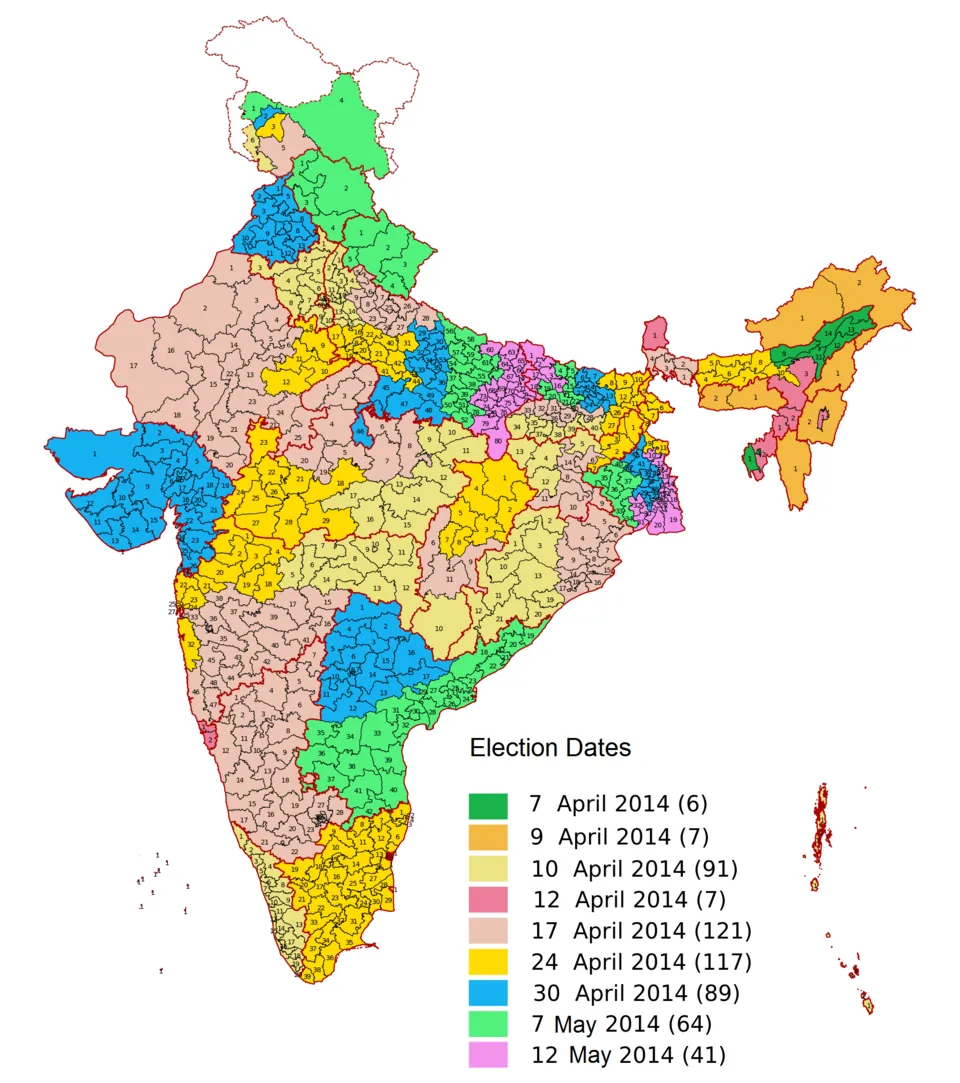
India's 2014 general election, staged in nine rounds between 7 April and 12 May to choose the 16th Lok Sabha, was then the largest election ever, with 834 million voters. The Bharatiya Janata Party won a clear majority on its own, and Narendra Modi became Prime Minister.
India voted over nine phases, from 7 April through 12 May 2014, to choose the 543 elected members of the sixteenth Lok Sabha. With 834 million registered voters, it was the biggest election in the world at that time, a record later passed in 2019. About 23.1 million voters, or 2.71 percent of the electorate, were aged eighteen or nineteen, and 8,251 candidates stood. Turnout averaged about 66.44 percent over the nine phases, the highest ever recorded in a Lok Sabha election up to that date. When the counting was done on 16 May, the Bharatiya Janata Party had won 282 seats, a majority in its own right, the first time any party had done so since 1984, and with its allies in the National Democratic Alliance it held about 336. The Indian National Congress, which had led the government for ten years, fell to only 44 seats, its lowest total. The BJP's leader, Narendra Modi, then chief minister of Gujarat, was sworn in as Prime Minister on 26 May. The result is widely regarded as a turning point that reshaped national politics and ended a long era of coalition government.
Sources
- 2014 Indian general election Wikipedia · CC-BY-SA-4.0
- Q3587169 Wikidata · CC0-1.0