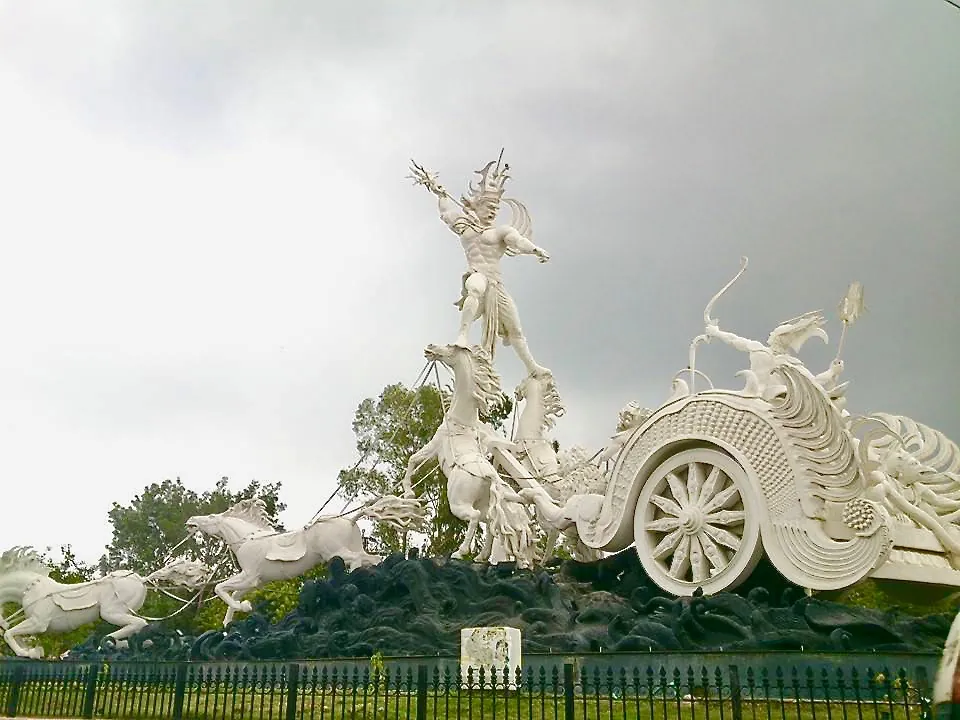
Ghaṭotkaca Draws Karṇa's Divine Weapon
Ghaṭotkaca · घटोत्कच
Traditional reckoning of Mahābhārata chronology; not dated history.
Ghaṭotkaca is the son of Bhīma and the rākṣasī Hiḍimbā in the Mahābhārata. Leading an akṣauhiṇī for the Pāṇḍavas at Kurukṣetra, he wreaks havoc on the Kaurava army and forces Karṇa to hurl his divine Vāsavī śakti, dying as a hero. His tale is epic narrative, dated only by tradition.
Ghaṭotkaca is a warrior of the Mahābhārata whose name, 'bald pot', recalls his hairless head shaped like a ghaṭa, a clay jar. His father was the Pāṇḍava Bhīma and his mother the rākṣasī Hiḍimbā, so he is part human and part rākṣasa. In the Kurukṣetra war he commanded one akṣauhiṇī, a full army division, on the Pāṇḍava side and was among its most effective fighters, bringing great destruction on the Kaurava forces. The epic says he slew several demons and giants, among them Alambuṣa and Alāyudha. His fame rests above all on the night battle, when his fury grew so overwhelming that Karṇa was compelled to use the Vāsavī śakti, a single-use weapon given by Indra that Karṇa had saved for Arjuna. Ghaṭotkaca fell to it, and his death was regarded as a heroic sacrifice that spared Arjuna. Later regional traditions in India and Southeast Asia have celebrated him in theatre and folk retellings. The date given follows traditional epic reckoning and is sacred narrative, not a historical year.
Sources
- Ghatotkacha Wikipedia · CC-BY-SA-4.0
- Q1976196 Wikidata · CC0-1.0