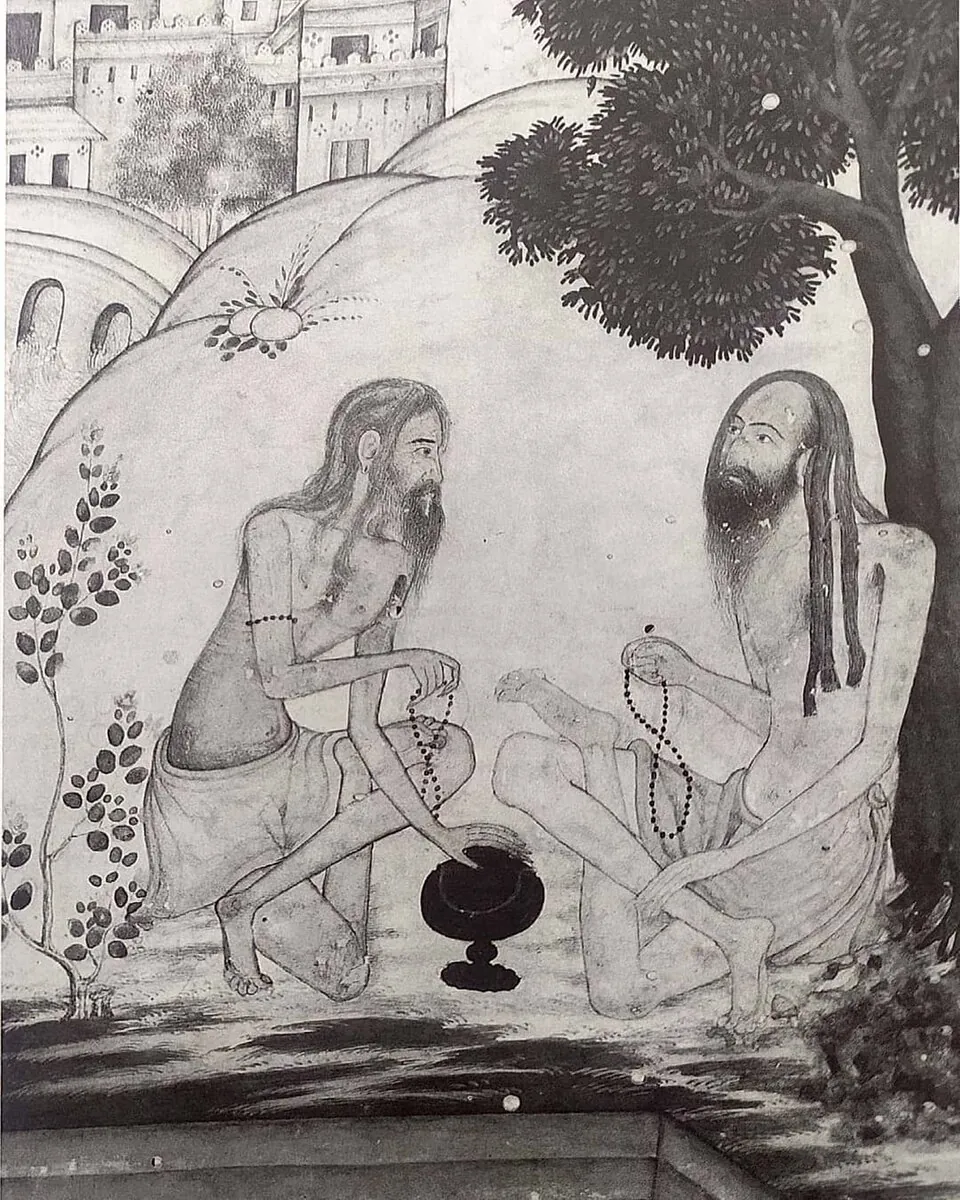
Ikṣvāku Founds the Solar Dynasty of Kosala
Ikṣvāku · इक्ष्वाकु
Position in Puranic manvantara and yuga reckoning; not historical dating.
Hindu and Jain scriptures remember Ikṣvāku as the first king of Kosala and founder of the Sūryavaṃśa, the solar line, said to be a son of Śrāddhadeva Manu. Rāma is counted among his descendants. The date is a traditional placement in cosmic time, not a historical year.
In Puranic genealogy Ikṣvāku is the founding monarch of the kingdom of Kosala and of the Solar dynasty, also called the Ikṣvāku line. He is described as one of ten sons of Śrāddhadeva Manu, the Manu of the present seventh manvantara, which makes him a figure from the opening of the current cosmic cycle. Tradition credits him with a hundred sons; Vikukṣi was the eldest, while another son, Nimi, is said to have founded the kingdom of the Videhas. Rāma, hero of the Rāmāyaṇa, is named as a later member of the same lineage, which is why Ikṣvāku matters so much in devotional and literary memory. Jain and Buddhist writings know him too, in forms such as the Pāli Okkāka, and Kosala itself did exist as a real kingdom in ancient India. Even so, the king as described belongs to genealogical tradition. The figure given follows the long yuga chronology of the Purāṇas and should be read as a sacred reckoning, never as a historically dated reign.