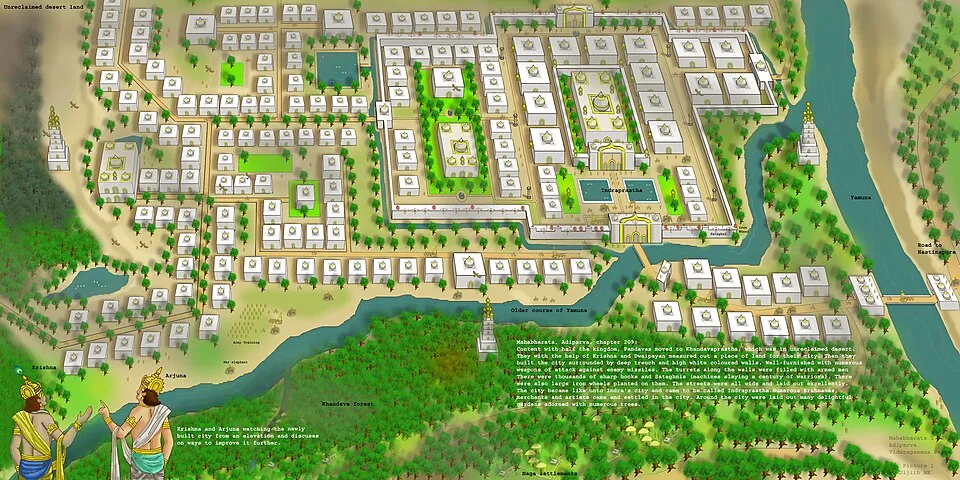
Indraprastha, Capital of the Pāṇḍavas
Indraprastha · इन्द्रप्रस्थ
Traditional Mahābhārata chronology; archaeology shows no matching ancient city.
Indraprastha, the Pāṇḍavas' capital in the Mahābhārata, was said to have been raised by Kṛṣṇa and Arjuna from the cleared Khāṇḍava forest on the Yamunā. Buddhist texts also name it as the Kuru capital. The Purāṇa Qilā in Delhi matches the description, but excavations found no great ancient city.
Indraprastha, literally the plain or city of Indra, is described in ancient literature as part of the Kuru kingdom and, in the Mahābhārata, as the capital of the five Pāṇḍava brothers. The epic says it was built on the Yamunā where the Khāṇḍava forest had been cleared by Kṛṣṇa and Arjuna, which is why the place is also called Khāṇḍavaprastha. Buddhist writings know it in Pali as Indapatta and name it as the capital of the Kuru mahājanapada. Today it is associated with Delhi, and the topography of the medieval Purāṇa Qilā beside the river fits the epic's description of the citadel. Archaeology, however, tells a more modest story. Digging there has recovered only limited Iron Age pottery, along with a few remains from the Mauryan to Kushan periods, and nothing that matches the splendour described in the epic. The date given follows traditional Mahābhārata chronology and is a mark of sacred narrative, not an archaeological dating of the site.
Sources
- Indraprastha Wikipedia · CC-BY-SA-4.0
- Q1975540 Wikidata · CC0-1.0