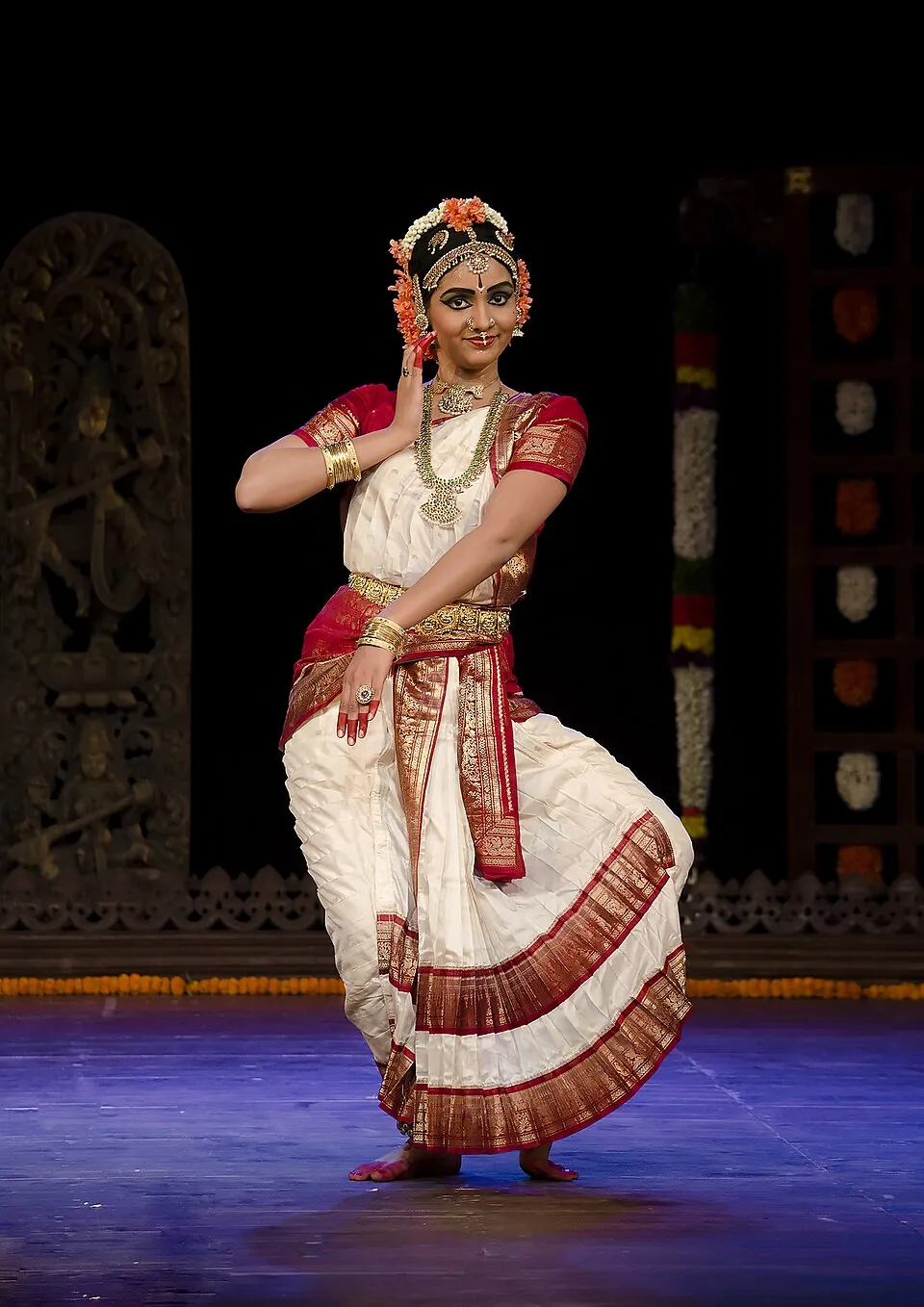
Kuchipudi, the Dance-Drama of Andhra
Kūchipūḍi · కూచిపూడి
Kuchipudi, one of India's eight classical dance forms, arose in the village of Kuchipudi in Andhra Pradesh as a dance-drama rooted in the Nāṭyaśāstra. Copper-plate inscriptions of the 10th century and texts of the 15th century refer to it, and tradition credits the ascetic Siddhendra Yogi with shaping it.
Kuchipudi takes its name from a village in Andhra Pradesh and is counted among the eight major classical dance forms of India. It is a dance-drama form with roots in the ancient Sanskrit Nāṭyaśāstra, and like the other classical styles it grew as a religious art linked with wandering bards, temples and devotional belief. An older version of the tradition is seen in copper inscriptions of the tenth century, and by the fifteenth century it is mentioned in sources including the Machupalli Kaifat, a local chronicle. According to tradition the ascetic Siddhendra Yogi, a devotee of Kṛṣṇa, with giving the form its structure in the seventeenth century, composing the dance-drama Bhāmākalāpam, which remains central to the repertoire. Originally performed by Brahmin men who took female roles, it later opened to women performers in the twentieth century. Its style blends fluid footwork, expressive gesture, song and sometimes humour, and includes the virtuoso tarangam, in which a dancer performs on the rim of a brass plate. The date marks the period when the tradition took the shape known today.