The Malabar Rebellion of 1921
Violence ran for about six months from August 1921; casualty figures differ sharply by source.
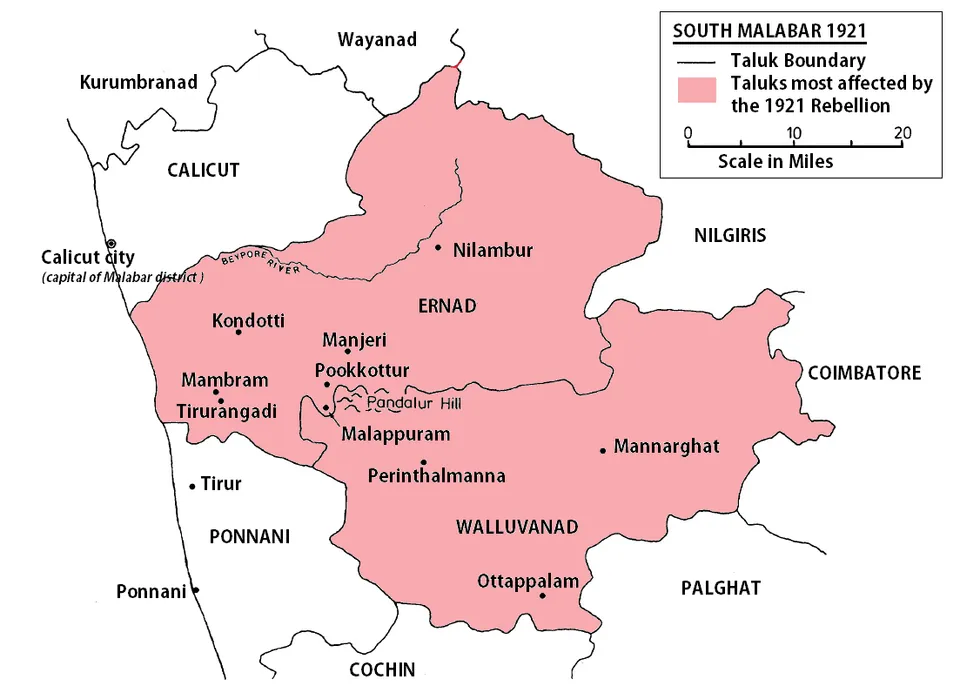
From August 1921 the Malabar or Moplah rebellion spread across about 40 percent of South Malabar. It began as resistance to British rule, and for Mappila participants was chiefly a peasant revolt. Troops and martial law ended it after six months, with thousands dead and many imprisoned or deported.
The Malabar rebellion of 1921, also called the Moplah or Mappila rebellion, began as resistance to British rule in parts of southern Malabar, in present-day Kerala. Mappila participants saw it chiefly as a peasants' uprising against colonial rule, and rebels attacked telegraph lines, railway stations, courts and post offices. It followed clashes between Mappila Muslims and Hindus and Muslim landlords, backed by the government, through the nineteenth and early twentieth centuries, and arose amid resistance to the harsh suppression of the Khilafat movement. For six months from August 1921 it covered some 2,000 square miles, about 40 percent of South Malabar. Troops and martial law put it down. An estimated 10,000 people died, though official figures give 2,337 rebels killed, and tens of thousands were imprisoned, many deported to the Andamans. The Arya Samaj reported about 600 Hindus killed and 2,500 forcibly converted. Historians still debate whether religious fanaticism or agrarian grievance drove the revolt; Congress distanced itself at the time, while some modern Indian assessments see a national upheaval.
Sources
- Malabar rebellion Wikipedia · CC-BY-SA-4.0
- Q944568 Wikidata · CC0-1.0