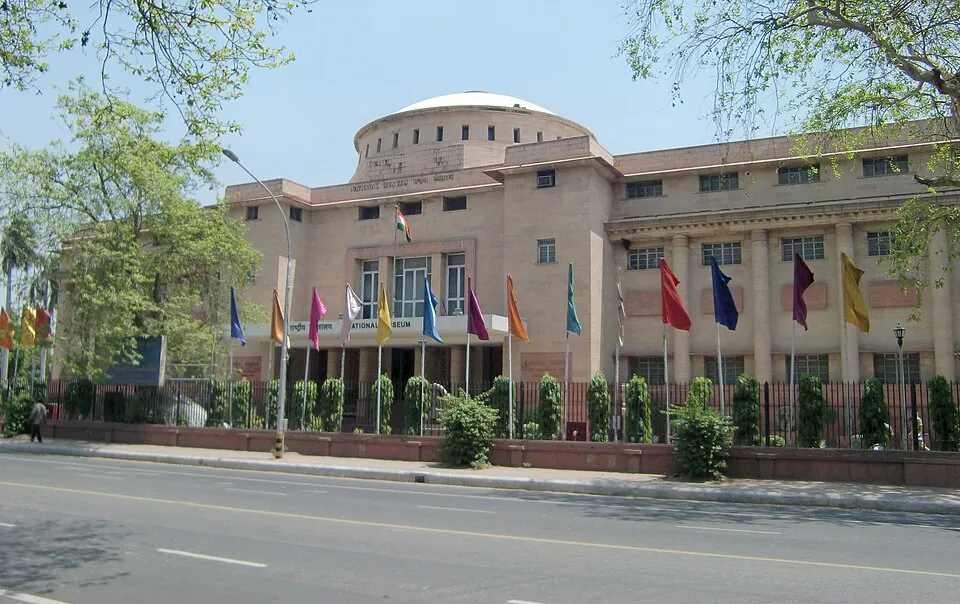
National Museum Opens in New Delhi
Rāṣṭrīya Saṃgrahālaya · राष्ट्रीय संग्रहालय
The National Museum of India was established in 1949 and opened at Rashtrapati Bhavan before moving to its own building on Janpath. Its collection of roughly two hundred thousand works spans over five thousand years and includes celebrated Chola bronzes. It rests on a plan drawn by the Gwyer Committee of 1946.
The National Museum in New Delhi was established in 1949, only two years after independence, and it quickly became one of the largest museums in India. Its blueprint came from the Gwyer Committee, which the government had set up in 1946 to plan a national museum. The collection was first displayed in the Rashtrapati Bhavan, and the museum moved to its present purpose-built home on Janpath in 1960. It holds some two hundred thousand works, most of them Indian though some foreign, and its range stretches from prehistoric objects to modern art, covering more than five thousand years. Among its best known holdings are the Chola bronzes, which have long been prized for their grace, and the museum has also served as a showcase for sculpture, miniature painting, textiles, manuscripts and archaeological finds from the Indus cities onward. It is run by the Ministry of Culture. An associated teaching body for art history, conservation and museology, set up in 1983 on the first floor, gained university status in 1989 and offers postgraduate degrees. The museum is a major public institution for presenting India's heritage.
Sources
- National Museum of India Wikipedia · CC-BY-SA-4.0
- Q1356138 Wikidata · CC0-1.0