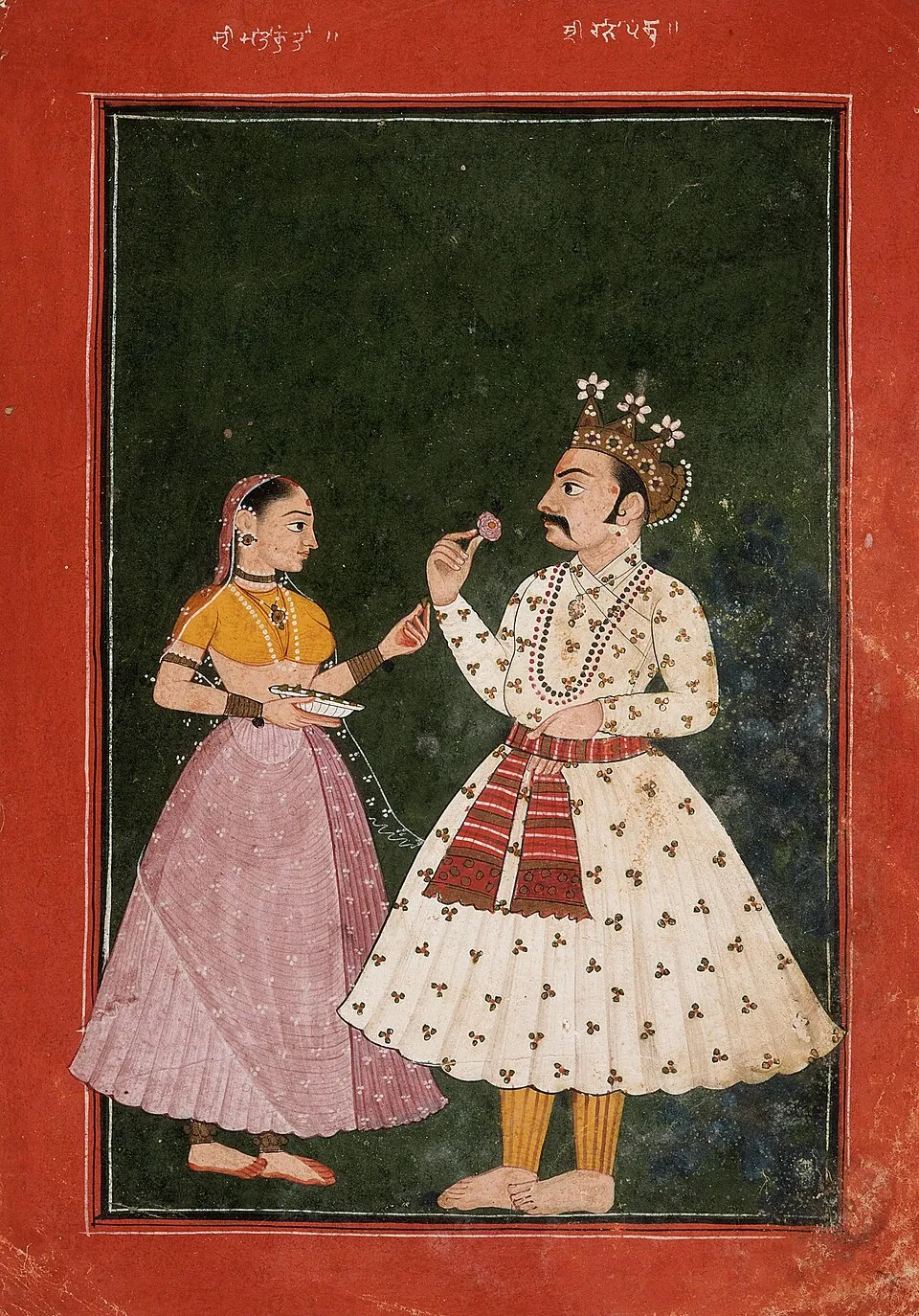
Pāṇḍu, Kuru King and Father of the Pāṇḍavas
Pāṇḍu · पाण्डु
Traditional Mahābhārata chronology; not dated history.
In the Mahābhārata, Pāṇḍu, born pale to Ambālikā, rules the Kuru kingdom from Hastināpura and is the legal father of the five Pāṇḍavas. After a sage's curse, his sons are born through boons granted to his wives Kuntī and Mādrī by various gods.
Pāṇḍu, whose name means 'pale', is a king in the Mahābhārata. He is born to Vicitravīrya's second wife Ambālikā and takes the throne of the Kuru kingdom, ruling from Hastināpura. He marries Kuntī and Mādrī. According to the epic, the sage Kindama lays a curse upon him, and because of it he cannot father children himself. His wives therefore invoke deities through boons: from these come the sons known as the Pāṇḍavas, among them Yudhiṣṭhira, Bhīma and Arjuna, who stand at the centre of the story. Pāṇḍu is thus their legal father though not their biological one, and his death prepares the later conflict over the Kuru succession. The Mahābhārata is a long literary and religious work composed over centuries. The year given here comes from traditional epic reckoning, which does not claim documented history, so it should be read as part of sacred narrative.