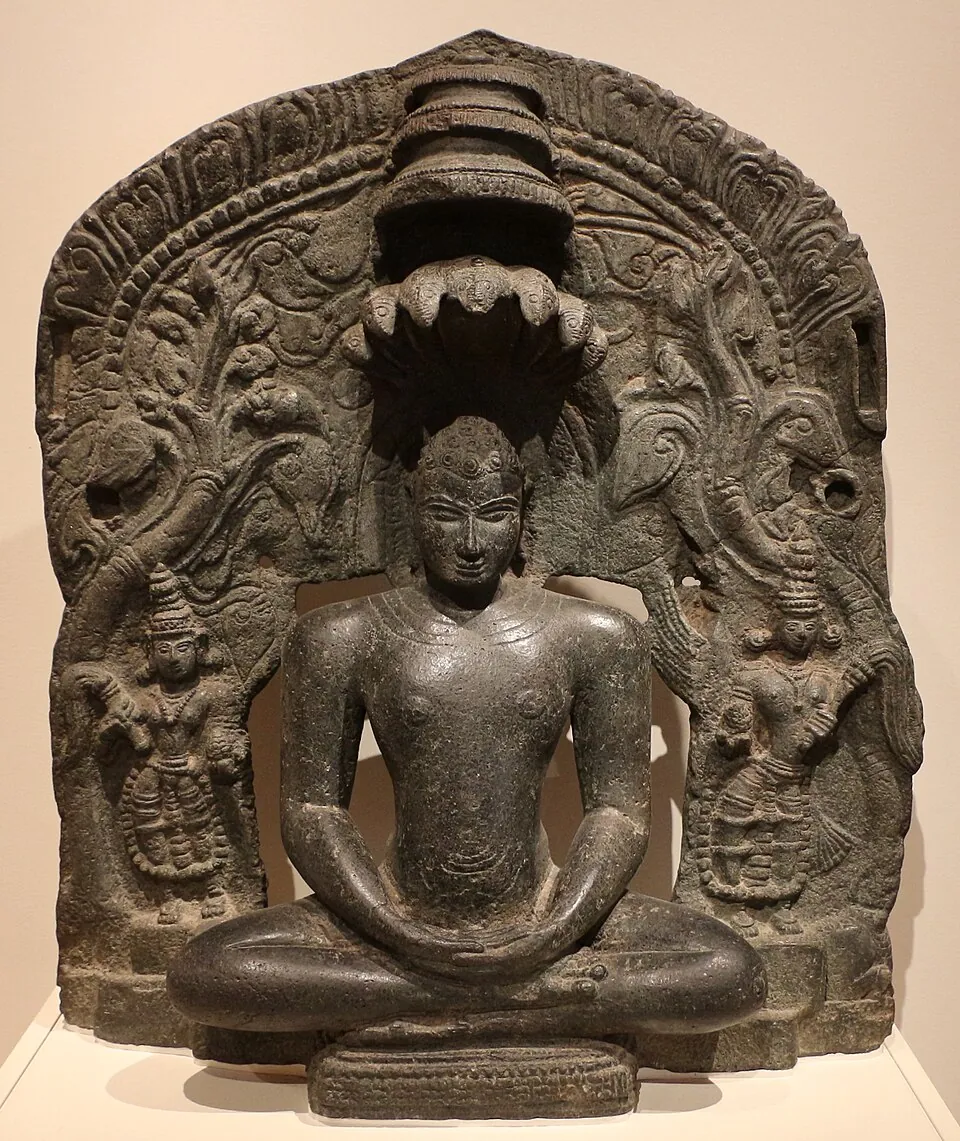
Pārśvanātha, Twenty-Third Jain Tīrthaṅkara
Pārśvanātha · पार्श्वनाथ
Pārśvanātha is the twenty-third tīrthaṅkara of Jainism and the earliest one accepted as historical. Jain tradition dates him to the ninth to eighth centuries BCE, historians to the eighth or seventh. He founded an ascetic community that Mahāvīra later reformed and is shown with a serpent hood.
Pārśvanātha was the twenty-third of the twenty-four tīrthaṅkaras, the ford-makers who teach the path in Jainism. He is the earliest of them whom scholars accept as a historical person, with a genuine core within the legendary biographies. Jain tradition places him in the ninth to eighth centuries BCE, while historians favour the eighth to seventh, so the marker here sits at the start of this era as an approximation. Tradition says he was born at Vārāṇasī to King Aśvasena and Queen Vāmādevī and lived 273 years before Mahāvīra. He renounced the world, founded an ascetic community and followed Neminātha as spiritual successor. He is believed to have attained liberation on Mount Sammeda, now Parasnath Hill in Jharkhand, an important pilgrimage place. His images are recognised by a serpent hood above the head, and worship often includes the serpent deities Dharaṇendra and Padmāvatī. Digambara and Śvetāmbara texts differ about his teaching: the former see no difference from Mahāvīra, the latter hold that Mahāvīra expanded four restraints with ahiṃsā and added celibacy as a fifth vow.
Sources
- Pārśvanātha Wikipedia · CC-BY-SA-4.0
- Q1400271 Wikidata · CC0-1.0