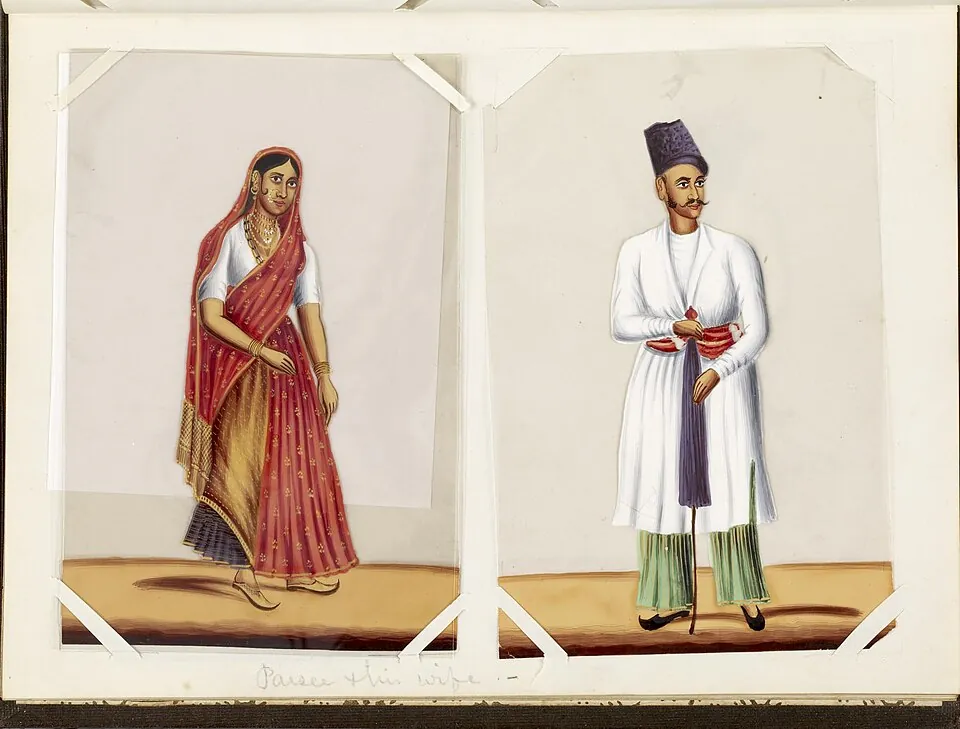
Parsis: Zoroastrians of the Indian Subcontinent
The Parsis are an ethnoreligious community of the Indian subcontinent, descended from Persian Zoroastrians who sought refuge after the Arab conquest of Iran. Their migration, told in the sixteenth-century Qissa-i Sanjan, continued from the seventh to the tenth century. They are the older of the subcontinent's two Zoroastrian communities.
The Parsis, also spelled Parsees, are a distinct ethnic and religious community of South Asia. They descend from Persian Zoroastrians who left Iran during and after the Arab conquest in the seventh century, a time when followers of their faith faced persecution. They are the older of two Zoroastrian communities in the subcontinent, the other being the Iranis, who arrived later from Qajar Iran, and the two groups differ in culture, language and social life. The name Parsi comes from the Persian word for Persian. According to the Qissa-i Sanjan, a Parsi epic of the sixteenth century, Zarthushti Persians of the Sasanian empire fled and found refuge in India, and the movement of people from different parts of the empire went on from the seventh to the tenth century. Parsi communities now live in India, Pakistan, China, Bangladesh, Sri Lanka and several Western countries. The date 1850 is a rough marker for the community's life under the colonial period, when Parsi merchants and reformers became prominent in western India, and it does not date the migration itself.