Polonnaruwa: From Chola Jananathamangalam to Sinhalese Capital
Poḷonnaruva · पोलोन्नरुवा
Polonnaruwa in Sri Lanka began as a Sinhalese military post and was renamed Jananathamangalam after the Cholas conquered Anuradhapura in the tenth century. Chola rule there ended around 1070, and the city then became a royal capital, its ruins now a World Heritage Site.
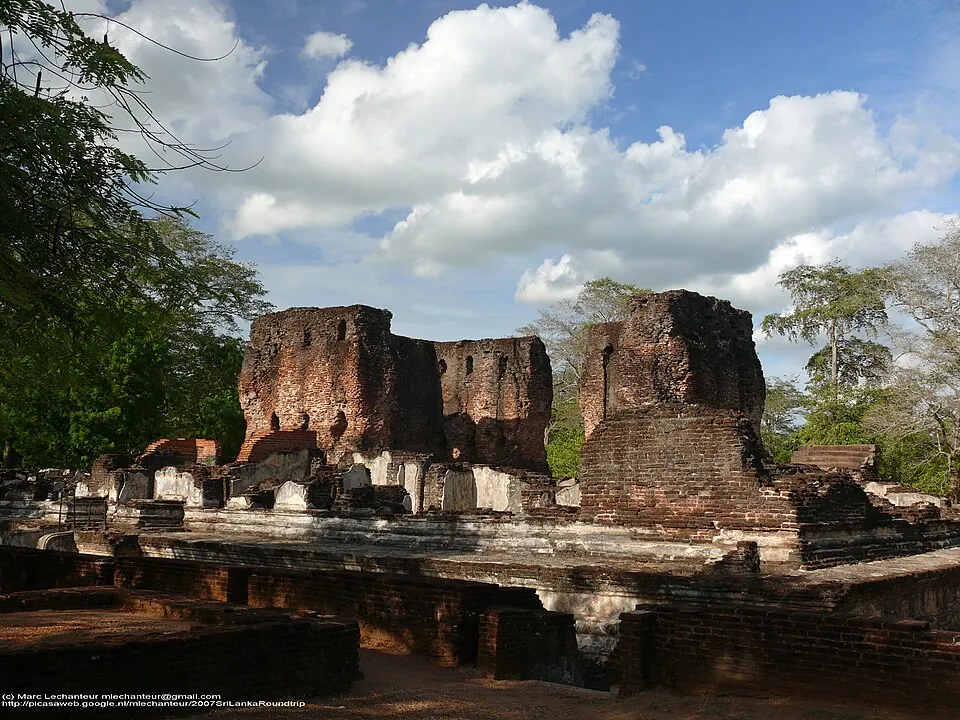
Polonnaruwa lies in Sri Lanka's North Central Province. It began life as a Sinhalese garrison and ranks as the second oldest of the island's royal capitals, after Anuradhapura. In the tenth century the Chola dynasty of south India invaded and took Anuradhapura, and from this base the Cholas chose Polonnaruwa as their administrative centre, renaming it Jananathamangalam. Their presence lasted several decades. Around 1070 the Sinhalese leader Vijayabahu I drove the Cholas out, and he made Polonnaruwa his capital, which began its time as the heart of the island's kingdom. In later reigns the city saw large building programmes, including monasteries, palaces, reservoirs and Buddhist and Hindu shrines. The mix of architecture, with Shiva temples built in the Chola period alongside Buddhist monuments, reflects the layers of its history and the connections between Sri Lanka and the Tamil country. Today the ancient city is distinguished from the modern town, sometimes called New Town, and is protected as a UNESCO World Heritage Site. The date used here marks the transition from Chola control to Sinhalese rule and is approximate.
Sources
- Polonnaruwa Wikipedia · CC-BY-SA-4.0
- Q394443 Wikidata · CC0-1.0