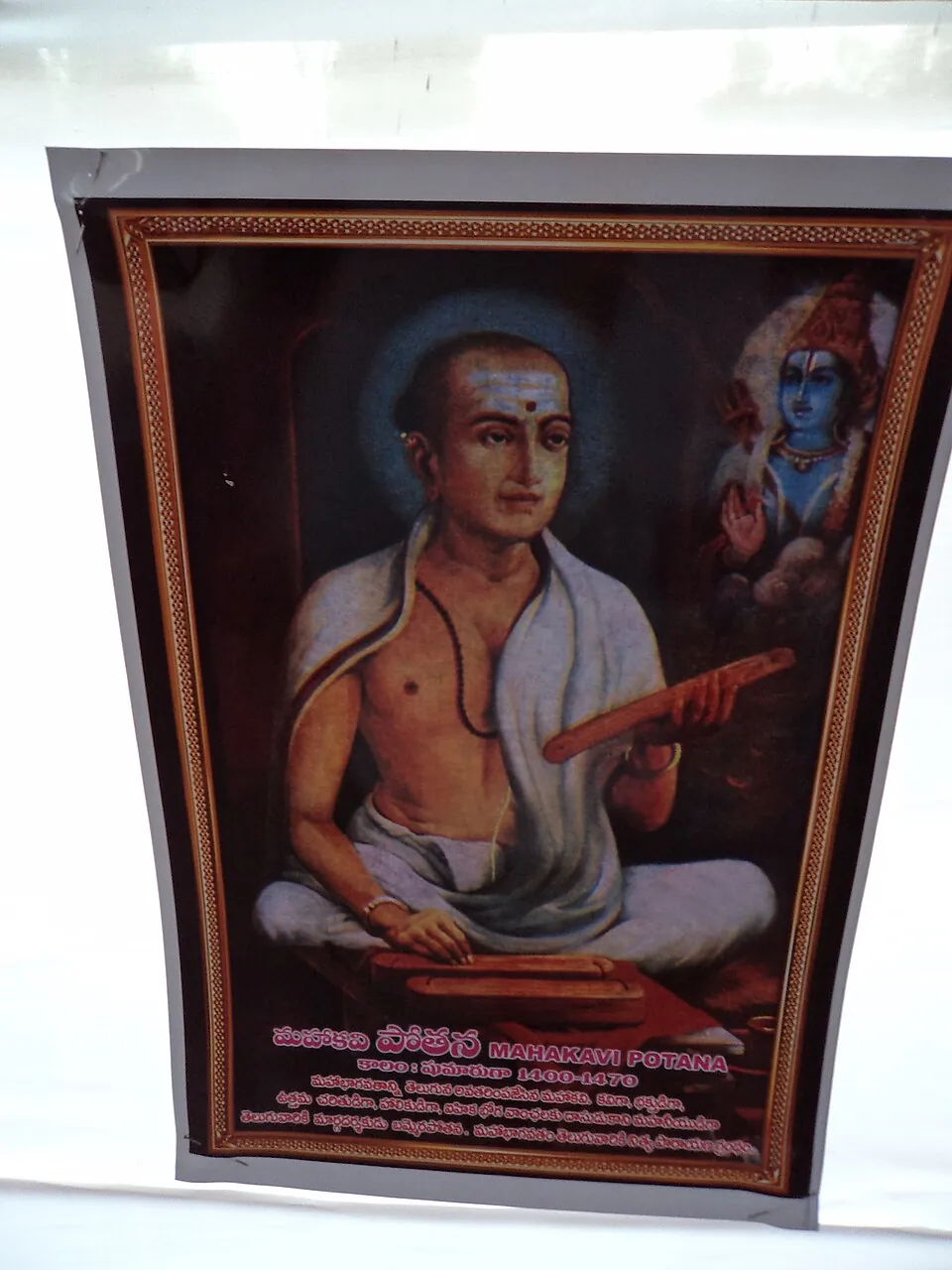
Pothana Renders the Bhāgavata into Telugu
Poṭana Bhāgavatamu · పోతన భాగవతము
Bammera Pothana, a fifteenth-century Telugu poet and Sanskrit scholar, translated the Bhāgavata Purāṇa into Telugu as the Śrīmad Āndhra Mahābhāgavatamu. Known as the Pothana Bhāgavatam, it remains one of the best-loved works of Telugu literature and is still recited at festivals and in homes.
Bammera Pothana lived in the fifteenth century and was a poet and scholar of both Telugu and Sanskrit. He is chiefly known for rendering the Bhāgavata Purāṇa, the great Sanskrit account of Viṣṇu and Kṛṣṇa, into Telugu verse, in a work called the Śrīmad Āndhra Mahābhāgavatamu or simply the Pothana Bhāgavatam. His version is not a word-for-word rendering; he reworks passages in fluent, musical Telugu that blends Sanskrit-based vocabulary with everyday speech, and many of its verses are memorised and sung by Telugu speakers. Popular tradition, though not firmly documented, says he refused to dedicate the poem to a king and offered it to Rāma instead, an anecdote often told to stress the devotional spirit of the work. The poem helped bring Purāṇic stories to a wide audience and became a model for devotional poetry in the language. Few secure biographical details are known, and sources vary on his exact dates, so the mid-fifteenth century is used here as an approximation. The text is still recited in homes and festivals, and teachers use it to introduce classical Telugu.