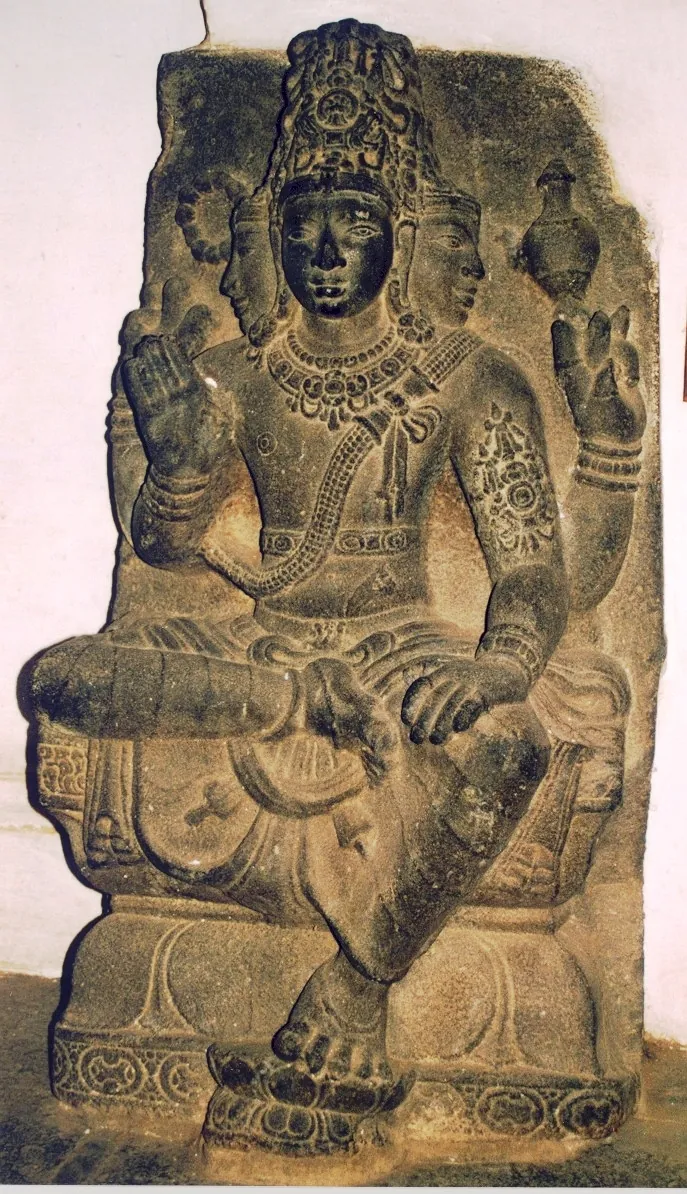
Prajāpati, Lord of Creatures in Vedic and Purāṇic Thought
Prajāpati · प्रजापति
Concept from Vedic and Purāṇic tradition; placed at the conventional cosmic marker, not dated history.
Prajāpati, meaning lord of creatures, is a major deity of the early Vedic religion, identified with the creator Brahmā. Later tradition uses the name for many creative figures, and philosophical texts link him with Brahman itself. The idea develops across many centuries of texts.
The name Prajāpati means lord of the people or of creatures. In the oldest Vedic religion he is a leading god of creation, later identified with Brahmā. Over time the word turned into a title that Purāṇic literature gave to a whole group of beings who share in the work of making the world. Among them are Brahmā himself, his sons, the divine architect Viśvakarman, and gods such as Agni, Indra and Dakṣa. Kaśyapa also bears the title, and he is described as the father of the Ādityas, Asuras, Gandharvas, Yakṣas and, through his grandson Vaivasvata Manu, of humankind. Jain tradition applies the name differently, equating Prajāpati with Kāmadeva. In philosophical writing of the classical and medieval periods, Prajāpati is treated as an expression of the metaphysical principle Brahman, so that creation is seen as arising from a single source. The entry reflects traditional religious thought, and its cosmic placement is conventional rather than a historical date.