The Thai Ramakien Is Compiled under Rama I
Rāmakīrti · रामकीर्ति
The Ramakien, from Sanskrit Rāmakīrti, is a Thai national epic adapted from the Rāmāyaṇa. Many versions perished when Ayutthaya fell in 1767, and one of the three that survive was compiled in 1797 at the direction of the first Chakri king.
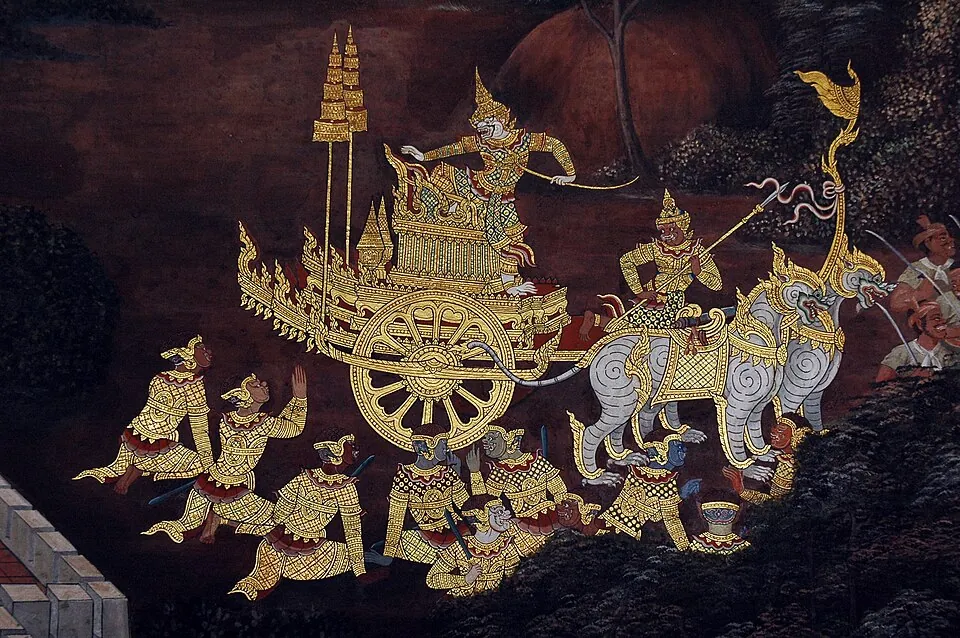
The Ramakien, whose name derives from the Sanskrit Rāmakīrti, meaning glory of Rāma, is one of the national epics of Thailand and a major part of its literary canon. It is a Thai telling of the ancient Indian Rāmāyaṇa. King Rama VI, who reigned from 1910 to 1925, was the first to study its sources systematically. By comparing it with the Sanskrit Rāmāyaṇa of Vālmīki, he showed that three works fed into it: that epic, the Viṣṇu Purāṇa and the Hanumān Nāṭaka. When the Burmese destroyed Ayutthaya in 1767 a number of versions disappeared. Three complete or substantial texts survive today. One version was compiled in 1797 by order of Rama I, founder of the Chakri dynasty, as part of the cultural restoration of the new Bangkok court. The story is far more than a book: it shapes classical Thai dance drama, masked khon performance, mural painting at the Grand Palace, and temple sculpture. Its adaptation illustrates how Indian narrative travelled across Southeast Asia and was reshaped to local tastes, with Thai names for its characters and distinct episodes of its own.