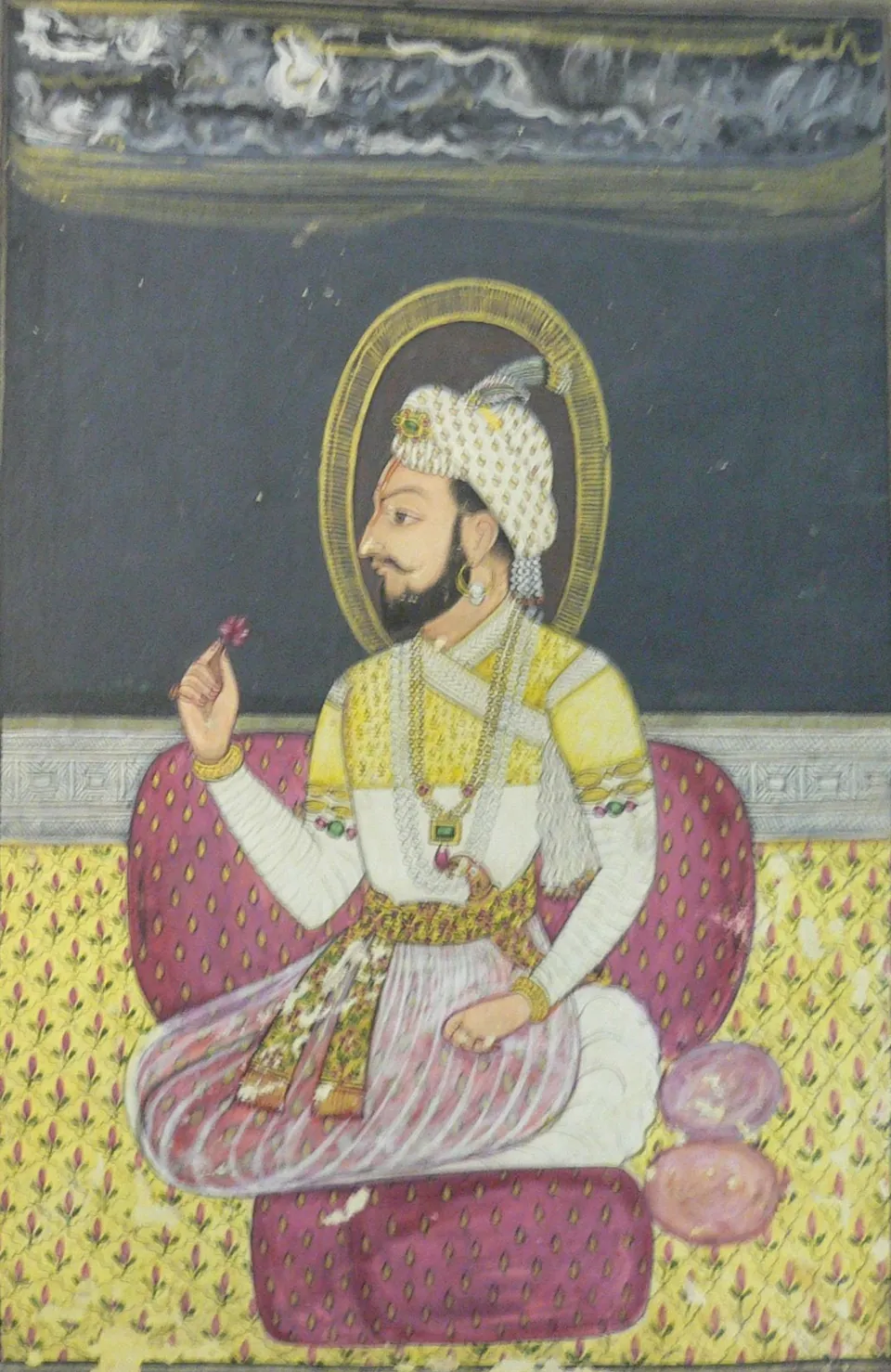
Sambhājī Ascends as the Second Chhatrapati
Sambhājī · संभाजी
Sambhājī, eldest son of Śivājī, became the second Chhatrapati of the Maratha state in 1681 and ruled until his death in 1689. His reign was dominated by the long war with Aurangzeb's Mughal empire and ended with his capture and execution.
Sambhājī Bhosale, born on 14 May 1657, was the eldest son of Śivājī and the second king, or Chhatrapati, of the Maratha state. At nine he was handed over as a political hostage to the Mughals under the treaty of Purandar and later went with his father to Agra, where both were held under house arrest by Aurangzeb before escaping. Relations with his father later broke down; he was confined at Panhāḷā and, according to some accounts, went over for a time to the Mughal side and served under Dilēr Khān. He took the throne after Śivājī's death in 1680, and his reign from 1681 was shaped largely by the continuing wars with the Mughals, who sent a huge army to the Deccan. Mughal forces captured him in 1689, and he was executed on 11 March of that year. His story continues to be debated, as sources of the period reflect different viewpoints. The date used here is the start of his rule.