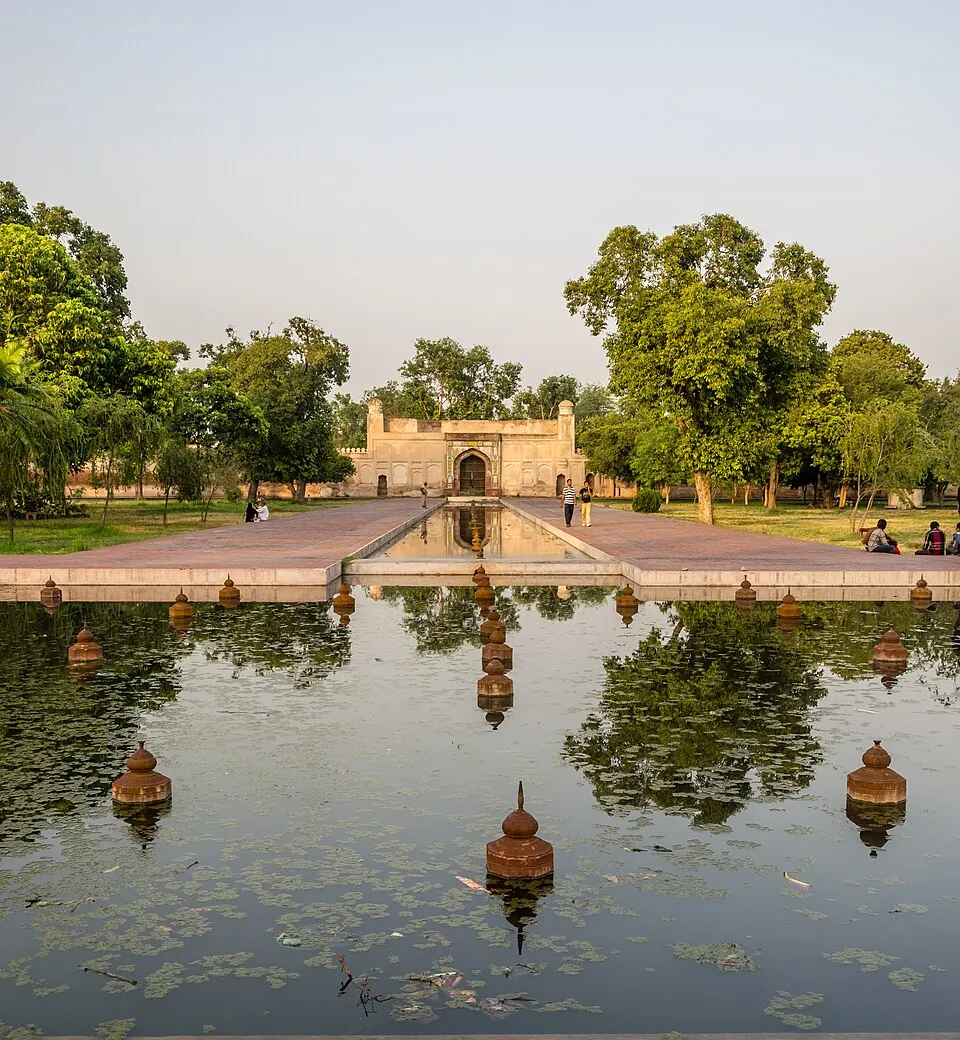
Shah Jahan Lays Out the Shalamar Gardens of Lahore
Shālāmār Bāgh · शालीमार बाग़
The Shalamar Gardens in Lahore, a Mughal complex laid out on the Charbagh plan, were begun in 1641 under Shah Jahan and finished in 1642. They are regarded as Mughal garden design at its peak, and UNESCO inscribed them as a World Heritage Site in 1981.
The Shalamar Gardens lie beside Baghbanpura in Lahore, Punjab, in present-day Pakistan. They are a Mughal garden complex of the seventeenth century, designed on the Charbagh plan, which divides a garden into quarters with water channels and walkways. Building started in 1641 under Emperor Shah Jahan, and the work was finished in 1642. The gardens were conceived as a royal retreat where terraces, fountains, pavilions and tree-lined paths created a setting for court leisure, and they reflect the Mughal taste for combining architecture, water and planting into a single ordered design. In 1981 UNESCO placed them on the World Heritage list, judging that they embody Mughal garden design at the height of its development. Today they remain one of the most visited places in Pakistan. The gardens belong to the same cultural world as the great Mughal monuments of Agra and Delhi, and they demonstrate how the empire's patronage left a legacy that is now shared across the modern countries of South Asia. Wikidata gives 1642 as the inception year, and the span used here covers the building period from 1641 to 1642.
Sources
- Shalamar Gardens, Lahore Wikipedia · CC-BY-SA-4.0
- Q499527 Wikidata · CC0-1.0