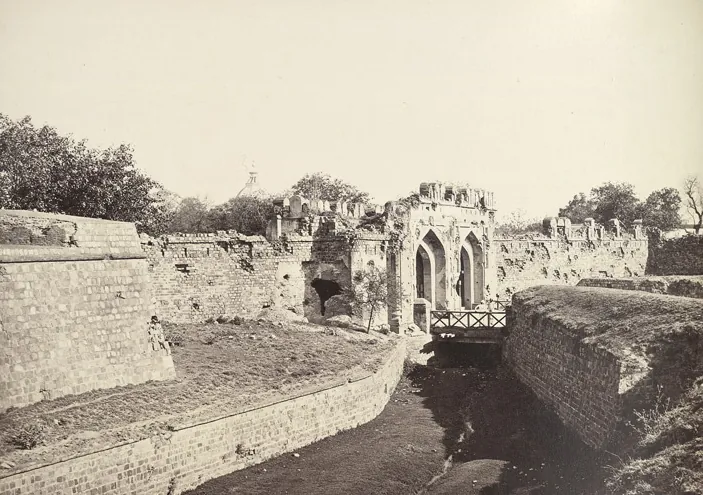
The Siege of Delhi in 1857
The siege of Delhi, from June to September 1857, was the decisive struggle of the Indian Rebellion. Rebel sepoys had rallied around the Mughal emperor, and the British recapture of the city and the fate of Bahādur Shāh Zafar ended the old Mughal order.
The siege of Delhi was a decisive contest of the Indian Rebellion of 1857. The uprising against the East India Company was widespread in northern India and began with mutinies among the sepoys of the Company's Bengal Army. The first mutineers wanted a symbol around which to unite, and so they marched on Delhi to restore the authority of the Mughal emperor, the aged Bahādur Shāh Zafar. With no overall command, many other rebels also gathered there. This made the siege critical for two reasons. First, large numbers of rebels were committed to defending one fixed place, to the cost of prospects elsewhere, so their defeat was a major military setback. Second, the British retook the city in September 1857 after fierce street fighting, and the emperor was captured, tried and exiled to Rangoon, which ended Mughal rule in all but memory. The city suffered heavy destruction and loss of life. The year 1857 is used as the date for the whole siege and its aftermath.
Sources
- Siege of Delhi (1857) Wikipedia · CC-BY-SA-4.0
- Q2343263 Wikidata · CC0-1.0