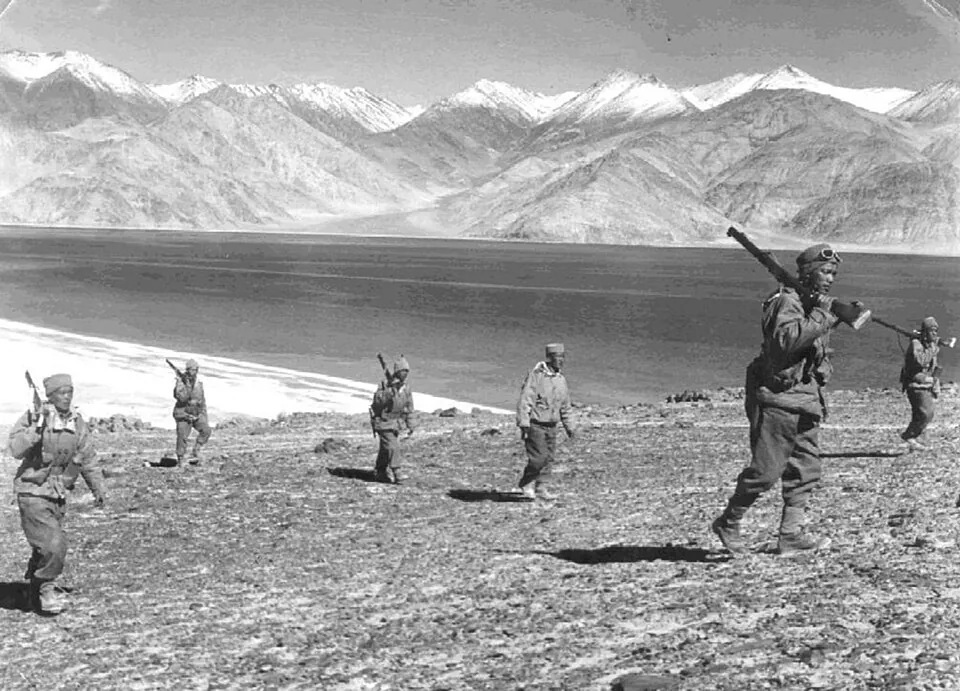
The Sino-Indian War of 1962
The Sino-Indian War was fought in October and November 1962 between China and India, escalating their border dispute along two fronts, the North-East Frontier Agency and Aksai Chin. Chinese forces gained the advantage, leaving a lasting mark on Indian politics and defence thinking.
The Sino-Indian War, also called the China-India War, was a brief armed conflict between the two states in October and November 1962, growing out of an unresolved border dispute. Fighting centred on two places roughly a thousand kilometres apart: the North-East Frontier Agency in the east and the Aksai Chin region in the west. The claims rested on different readings of historical boundaries. Neither accepted the other's frontier: India treated the Johnson Line as the western border, and the McMahon Line as the eastern one, whereas China rejected both. Skirmishes multiplied after the Tibetan uprising of 1959, when India gave asylum to the fourteenth Dalai Lama, and China's building of a strategic road across Aksai Chin sharpened the quarrel. Talks did not resolve it, and Chinese military activity hardened after India turned down Chinese proposals between 1960 and 1962, with forward patrols in Ladakh resuming after 30 April 1962. In September and October the tension peaked at Dhola Post and Thagla Ridge in the east, where India placed the McMahon Line along the ridge and China disputed it. A series of clashes left Chinese forces in the stronger position. The war's outcome shaped Indian security policy for decades.
Sources
- Sino-Indian War Wikipedia · CC-BY-SA-4.0
- Q208694 Wikidata · CC0-1.0