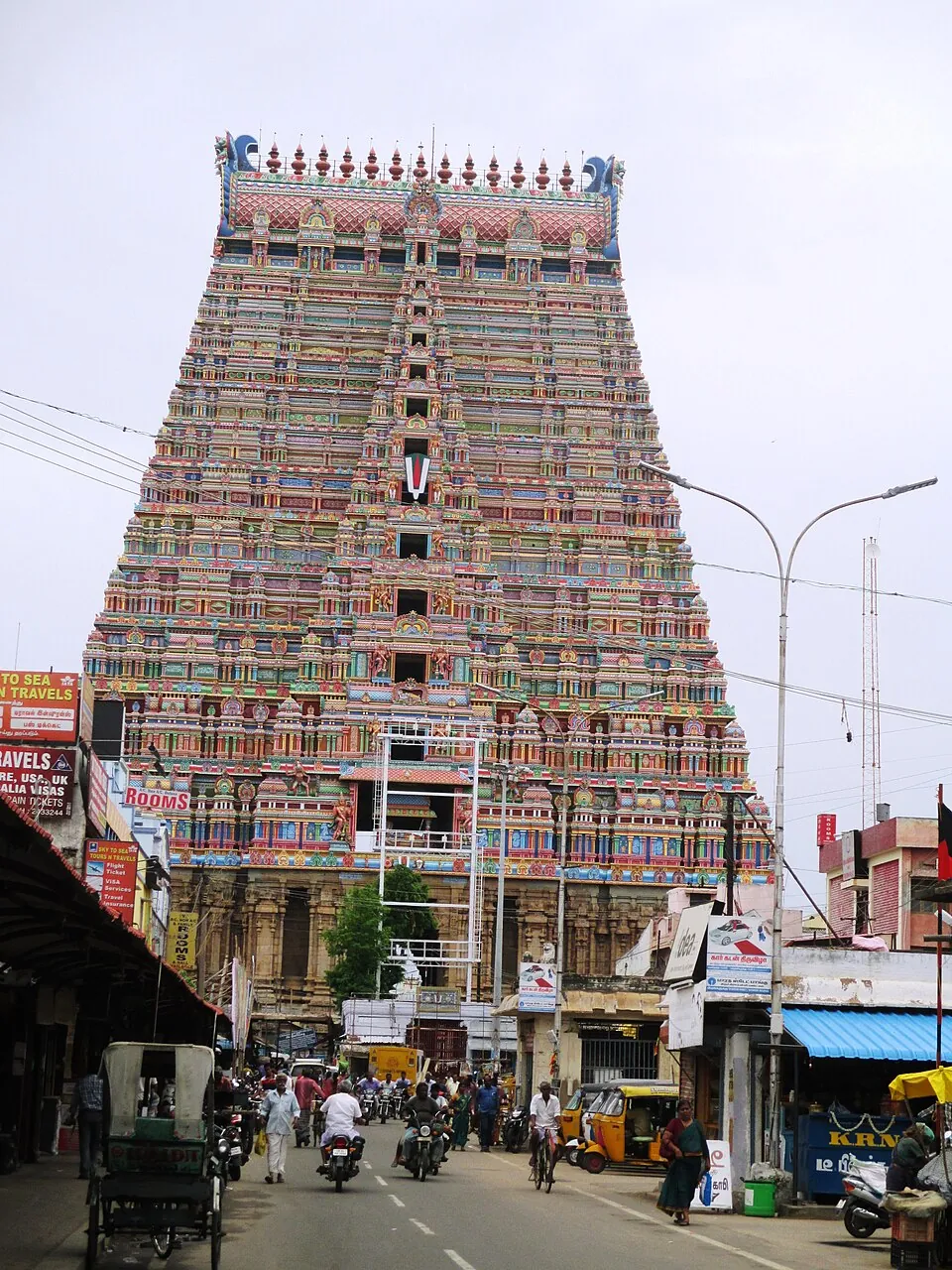
Srirangam: Temple Island of Ranganātha
Śrīraṅgam · श्रीरङ्गम्
On an island between the Kaveri and Kollidam rivers, the Ranganātha temple at Srirangam grew over many centuries into one of the largest living temple complexes anywhere. Sung by the Alvar poet-saints, it holds first place among the 108 Divya Desams of Vaishnava devotion and remains in daily worship.
The Ranganātha temple at Srirangam, near Tiruchirappalli in Tamil Nadu, honours Viṣṇu reclining as Raṅganātha beside his consort Raṅganāyakī. Its beginnings cannot be pinned to a single founding date. Poems of the Alvars, composed in the early medieval centuries and gathered in the Nālāyira Divya Prabandham, already celebrate the shrine, and Vaishnava tradition ranks it foremost among the 108 Divya Desams. Over the following centuries Chola, Pandya, Hoysala and Vijayanagara patrons added enclosures, halls and gateways, so the complex now consists of concentric walls rather than one planned building. Some parts were damaged and rebuilt during periods of conflict, which is one reason it is described as a living temple rather than a frozen monument. The great outer gateway, about 73 metres high, was completed only in 1987. The temple follows the Tenkalai practice of Śrī Vaishnavism and the Pāñcarātra liturgy, and its twenty-one-day Margazhi festival draws huge crowds each winter. The date given here marks the period of major early medieval growth, not a precise origin.
Sources
- Ranganathaswamy Temple, Srirangam Wikipedia · CC-BY-SA-4.0
- Q2671548 Wikidata · CC0-1.0