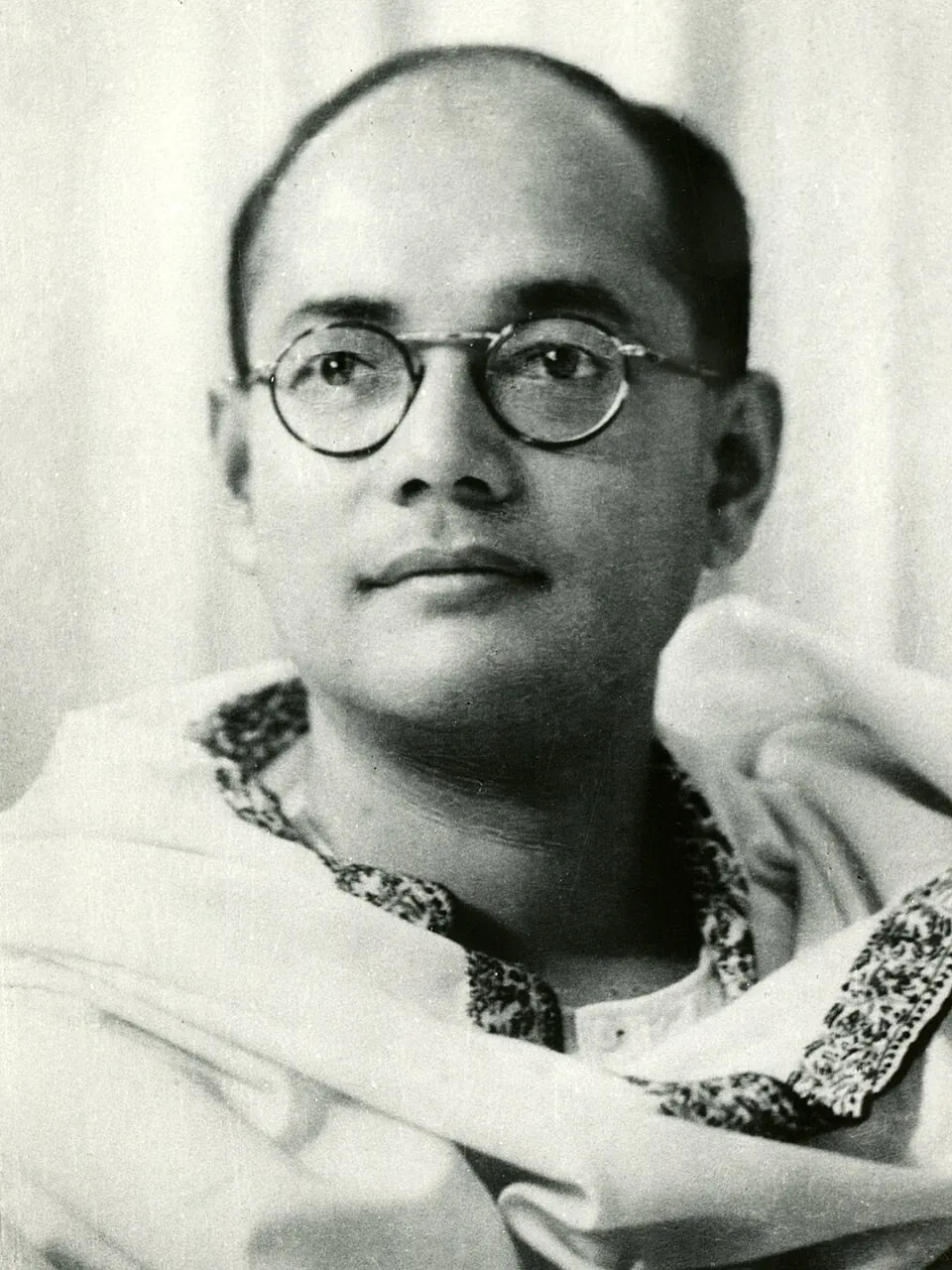
Bose Heads the Azad Hind Government
Subhāṣ Candra Bose · सुभाष चन्द्र बोस
Subhas Chandra Bose, honoured as Netaji, led the Provisional Government of Free India in 1943 and the Indian National Army in Southeast Asia, allying with Japan against British rule. Many Indians admire his defiance, yet his wartime partnership with Axis powers remains debated.
Subhas Chandra Bose, born in 1897 into a prosperous Bengali family in Orissa, passed the Indian Civil Service entrance exam in England but chose nationalism over a career in the service. He joined the Indian National Congress after returning in 1921, rose to its presidency in 1938, and later broke with Gandhi's leadership. During the Second World War he sought foreign help to oust the British, spent time in Germany, where the title Netaji, or Respected Leader, was first used for him in early 1942, and then travelled to Southeast Asia. In 1943 he took command of the Indian National Army and headed the Provisional Government of Free India, supported by Japan. His defiance made him a hero to many Indians, yet his wartime partnerships with Nazi Germany and Imperial Japan leave a complicated legacy marked by authoritarian tendencies and military failure. He reportedly died on 18 August 1945.
Sources
- Subhas Chandra Bose Wikipedia · CC-BY-SA-4.0
- Q2153 Wikidata · CC0-1.0