Sūrya Siddhānta, an Astronomical Treatise
Sūrya Siddhānta · सूर्य सिद्धान्त
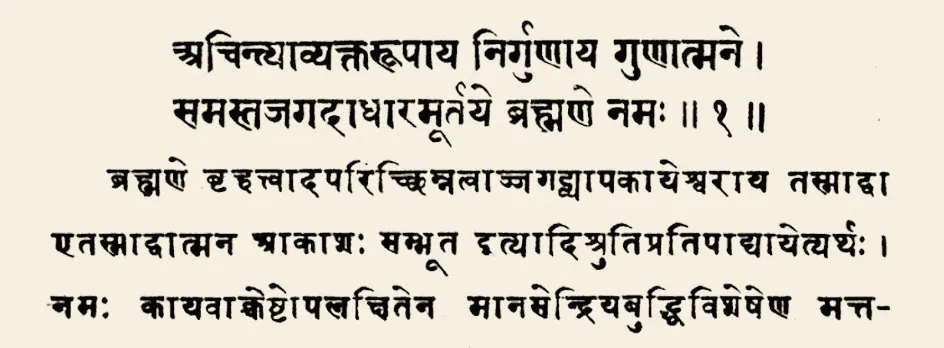
The Sūrya Siddhānta is a Sanskrit astronomical text in the siddhānta tradition, presented as a revelation from the Sun god. It gives methods for planetary motion, eclipses and timekeeping, and uses trigonometric sines. Its present form is often placed around 400 CE, with later revisions.
The Sūrya Siddhānta is among the most influential Sanskrit works on astronomy. Tradition presents it as knowledge taught by a solar being to the asura Maya, and the work is a siddhānta, a treatise that sets out computational methods. It describes how to calculate the positions of the Sun, Moon and planets, how to predict eclipses, and how to reckon time through the great cycles of yugas. It also uses the sine function, a trigonometric tool that Indian astronomers developed, in place of the Greek chord, and it gives a value for the earth's size and for the lengths of the sidereal year and month. The text was revised over centuries, so the version that survives differs from the one summarised by Varāhamihira in the sixth century in his Pañcasiddhāntikā. Many scholars therefore place the older core around the later Gupta period, near 400 CE, while others see it as a layered work. Commentators in later centuries, including in the Arab and Latin worlds through translation, knew its methods, and Indian calendar makers used it long after.
Sources
- Surya Siddhanta Wikipedia · CC-BY-SA-4.0
- Q2375684 Wikidata · CC0-1.0