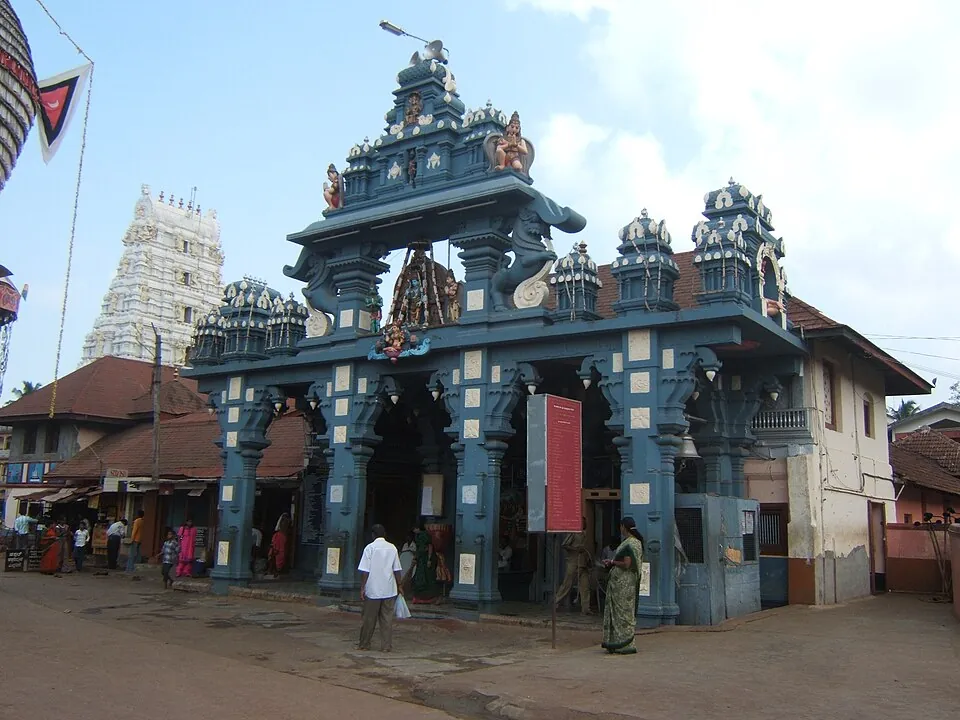
Madhva Establishes the Udupi Kṛṣṇa Matha
Udupi in coastal Karnataka is home to a Kṛṣṇa temple and monastic centre linked to Madhvācārya, founder of the Dvaita school. Traditionally dated to the thirteenth century, the Matha grew into a living centre of daily worship, scholarship and communal feeding.
The Śrī Kṛṣṇa Matha at Udupi is a temple and monastic complex tied to Dvaita Vedānta, the dualist school systematised by Madhvācārya in the thirteenth century. Tradition holds that he installed the image of Kṛṣṇa here and arranged for eight monasteries, the Aṣṭa Mathas, to share its worship in rotation, a custom that survives in the alternating Paryāya ceremony. The neighbourhood feels less like a monument than an ashram, with daily ritual, teaching and the serving of meals to visitors forming the rhythm of life. Close by stands the Anantheśvara temple, which is much older, reportedly more than a thousand years, showing that Udupi was already a sacred place before the Madhva community arrived. Because the exact year of installation rests on later tradition and not on a contemporary record, the date used here is an approximate marker for Madhva's activity in Udupi, around the middle of the thirteenth century. The Matha remains a major pilgrimage destination and a seat of Vaiṣṇava learning on the Karnataka coast.
Sources
- Udupi Sri Krishna Matha Wikipedia · CC-BY-SA-4.0
- Q2044395 Wikidata · CC0-1.0