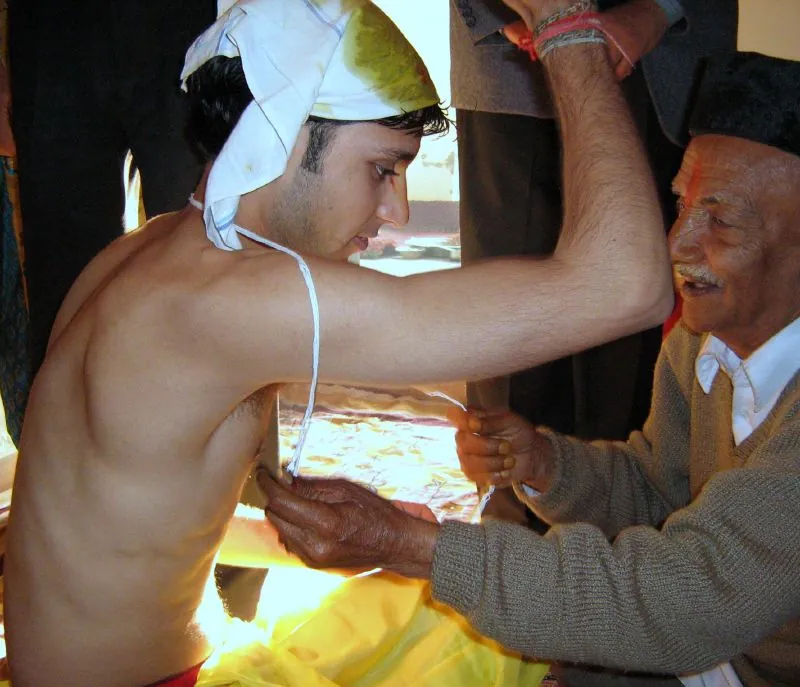
Upanayana: The Rite of Initiation into Study
Upanayana · उपनयन
Upanayana is a Hindu educational sacrament in which a student is accepted by a teacher and begins disciplined study as a brahmacārin. Seen by some traditions as a second birth, it is closely tied to the sacred thread. Texts describe it from early times, and practice varies by region.
Upanayana, literally initiation, is among the classical saṃskāras, the life-cycle rites of Hindu practice. It marked a young person's acceptance by a teacher, whether a guru or ācārya, and entry into a school of learning. Some traditions see it as a second, spiritual birth, hence the label dvija for those initiated. It opened a disciplined student life as a brahmacārin and is held especially important for Brāhmaṇa, Kṣatriya and Vaiśya boys, who gained duties along with entitlements as they approached adulthood. Ancient Sanskrit texts discuss the rite at length, and customs differ between regions. The sacred thread, known as yajñopavīta and by regional names such as janeu or pūṇūl, is now the most visible emblem of the ceremony, although it was not always so central. It is expected to take place before the onset of adulthood. The date used here reflects the period in which Vedic texts begin to describe the rite, and is only approximate.