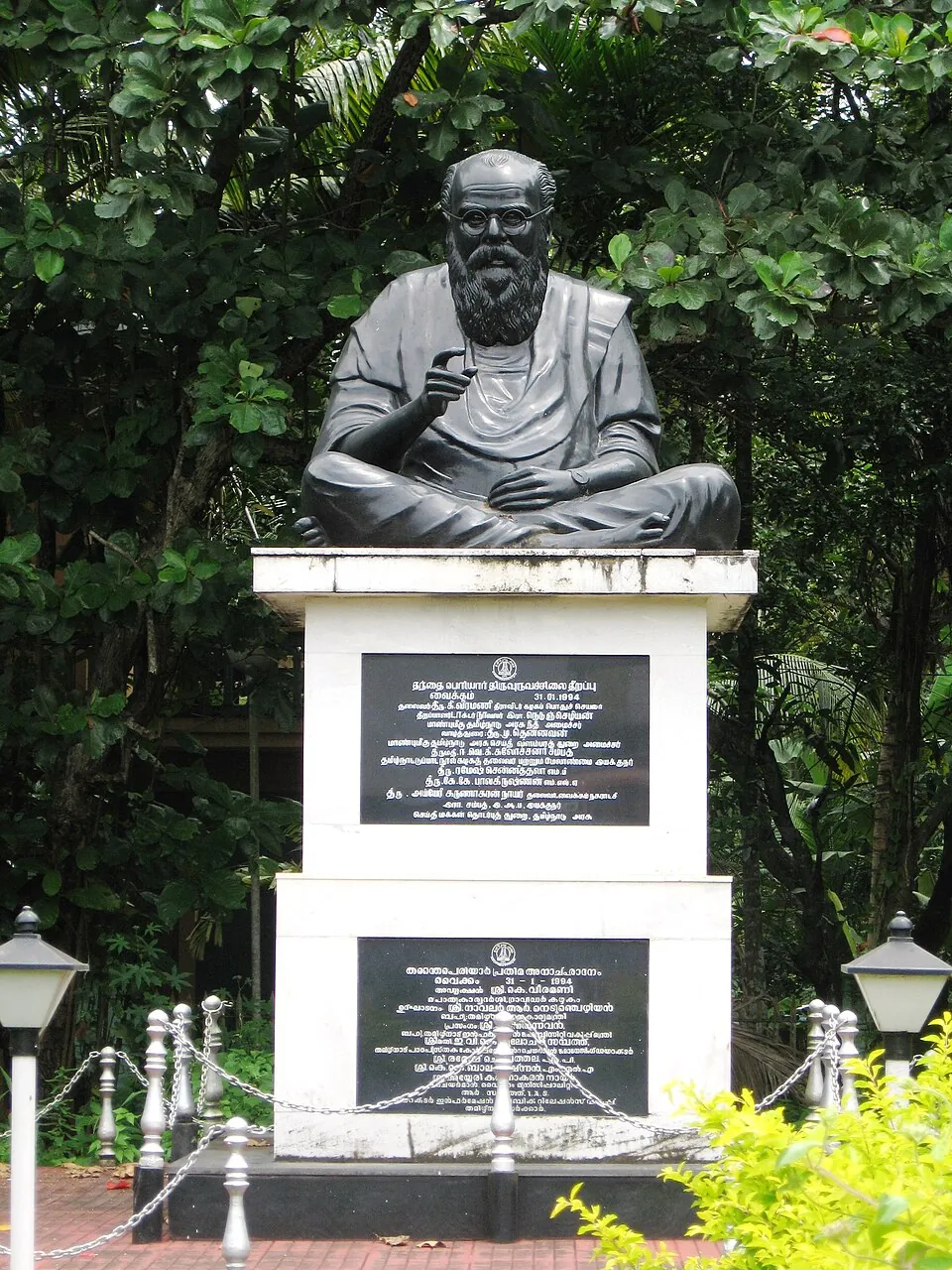
The Vaikom Satyagraha for Temple Roads
Vaikkaṁ Satyāgraha · വൈക്കം സത്യാഗ്രഹം
From March 1924 to November 1925, a nonviolent campaign at Vaikom in Travancore demanded that people of lower castes be allowed to use the roads around the temple. Led by Congress workers and visited by Gandhi in 1925, it was an important milestone in India's temple-entry struggles.
The Vaikom Satyagraha was a nonviolent protest in the princely state of Travancore, which ran from 30 March 1924 until 23 November 1925. Travancore enforced a rigid caste hierarchy, and most major temples barred people regarded as untouchable not only from entering but even from walking on the roads around them. T. K. Madhavan, an Ezhava Congress leader and follower of Sri Narayana Guru, conceived the campaign, under the leadership of Madhavan, along with K. Kelappan and K. P. Kesava Menon. Further participants included Mannath Padmanabhan, George Joseph and E. V. Ramasamy, known as Periyar, and the agitation drew support from various communities and activists. Gandhi visited Vaikom in March 1925. In the end the Travancore government built new roads near the temple that lower castes could use, a result that fell short of full equality, since the roads close to the temple remained restricted. The campaign nonetheless showed the power of disciplined nonviolent action against caste exclusion and paved the way for the Temple Entry Proclamation of 1936.
Sources
- Vaikom Satyagraha Wikipedia · CC-BY-SA-4.0
- Q3530995 Wikidata · CC0-1.0