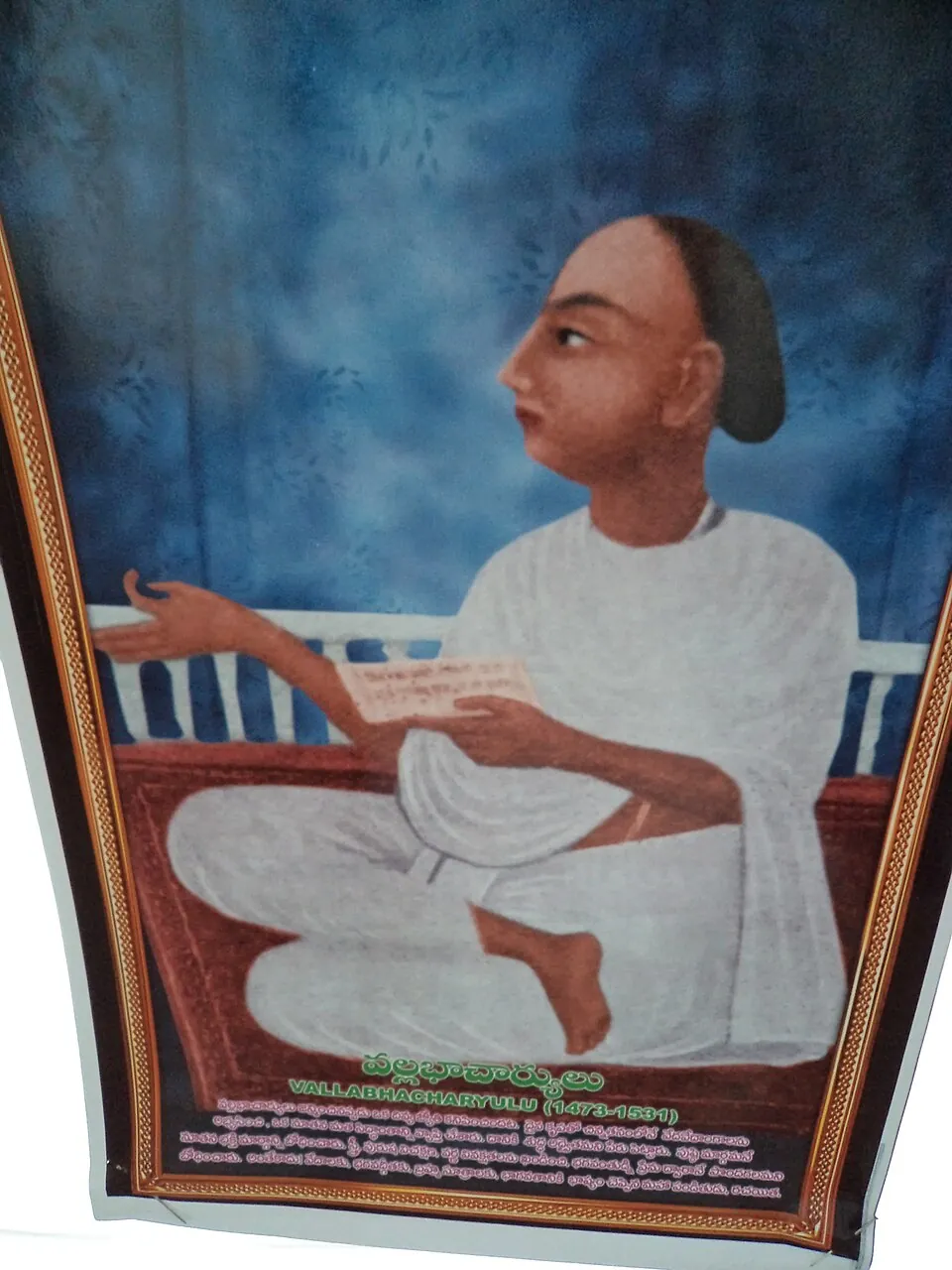
Vallabhācārya and the Puṣṭimārga
Vallabhācārya · वल्लभाचार्य
Vallabhācārya (1478 to 1530) founded the Puṣṭimārga, a Kṛṣṇa-centred devotional path in Vaiṣṇavism, and taught the philosophy of Śuddhādvaita. Born into a Telugu Brahmin family, he spent many years travelling across the subcontinent and was closely connected with the Braj region.
Vallabha, also called Vallabhācārya or Vallabha Dīkṣita, was born in 1478 and died in 1530, and is the founder of the Puṣṭimārga, the 'path of grace', a tradition of Kṛṣṇa devotion within Vaiṣṇavism. He taught the philosophy of Śuddhādvaita, or pure non-dualism, which holds that the world and the individual self are real expressions of the divine and not illusion. Born into a Telugu Brahmin family, he studied Hindu philosophy from an early age and then travelled across the subcontinent for more than two decades, spending much of his time in the Braj region around Mathurā, the land of Kṛṣṇa's childhood. Sectarian biographies, which are the main sources for his life, record debates and pilgrimages that cannot always be checked independently. Tradition links him with the temple of Śrīnāthjī at Govardhana, which became an important centre for his followers. His community cultivated devotional music and art, including the poetry of the Aṣṭachāp poets, and it later flourished in Gujarat and Rajasthan. His movement remains influential among many Vaiṣṇava families today.