Varman Dynasty Founds Historic Kāmarūpa
Varman Vaṃśa · वर्मन वंश
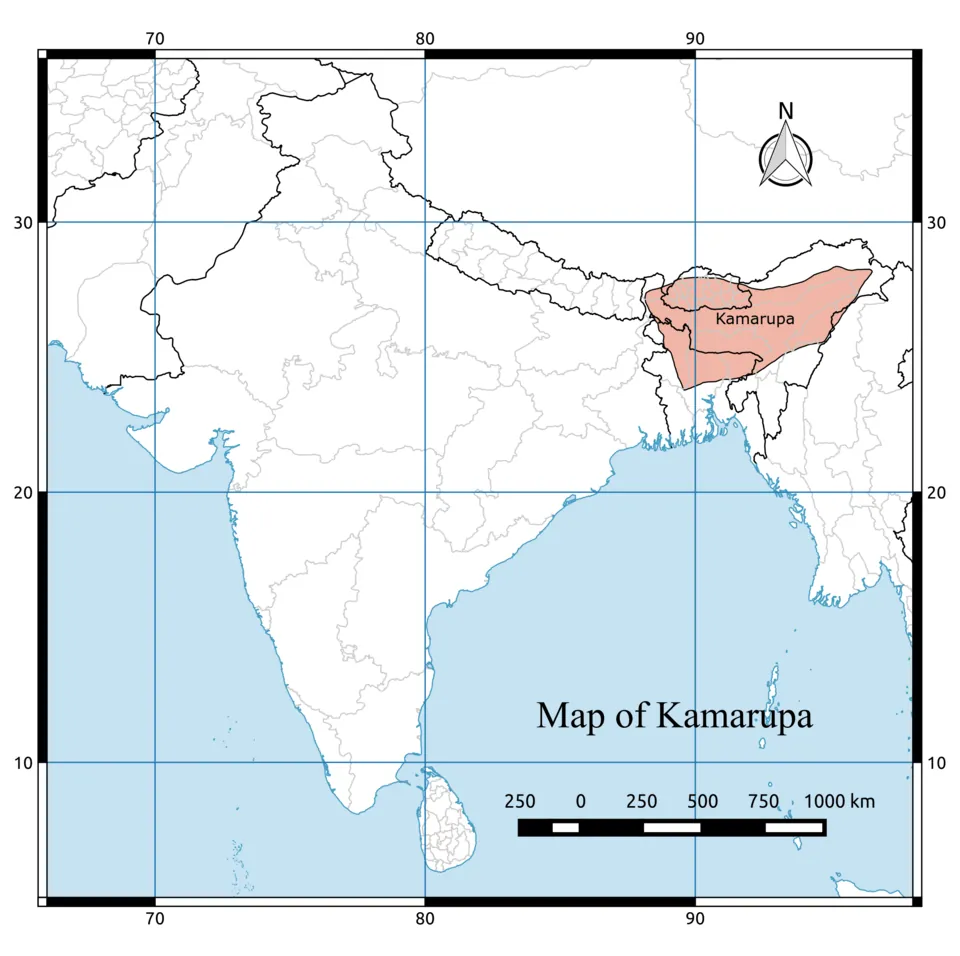
The Varman dynasty, ruling from about 350 to 650 CE, was the first historical royal house of Kāmarūpa in ancient Assam. Founded by Puṣyavarman, a contemporary of Samudragupta, it began as a Gupta subordinate but under Mahendravarman performed two horse sacrifices and secured independent standing.
The Varmans were the first of three successive dynasties of Kāmarūpa, a kingdom in the Brahmaputra valley of present-day Assam. Their line began with Puṣyavarman, who lived at the same time as the Gupta emperor Samudragupta. Early Varman rulers acknowledged Gupta suzerainty, but as Gupta power faded the kingdom grew self-reliant. Mahendravarman, who reigned from about 470 to 494, performed two horse sacrifices, a ritual traditionally used by kings to assert sovereignty, and from his time Kāmarūpa's independent position was not seriously disturbed. The dynasty's history also touches the wider politics of northern India: the Apsaḍ inscription of Ādityasena records that the Later Gupta prince Mahāsenagupta defeated Susthitavarman on the banks of the Lauhitya, the old name for the Brahmaputra. After the Varmans, rule passed first to the Mlecchas and later to the Pāla dynasty of Kāmarūpa. The period is important because it gives Assam its first well-documented royal tradition, preserved through copper-plate grants and inscriptions that record lineages and land donations. Dates for individual rulers are approximate and rest mainly on these records.
Sources
- Varman dynasty Wikipedia · CC-BY-SA-4.0
- Q1109008 Wikidata · CC0-1.0