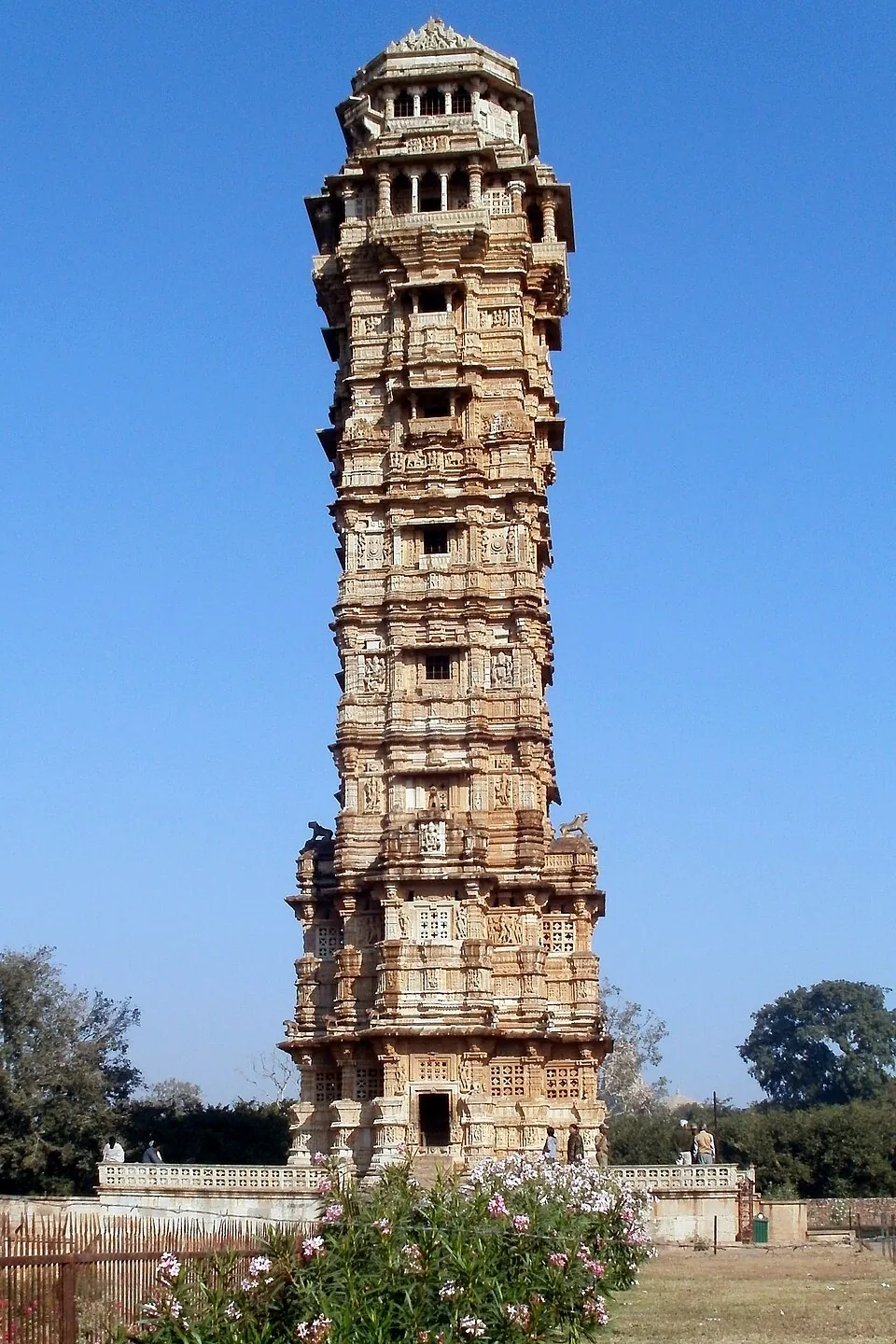
Vijaya Stambha, Rana Kumbha's Tower at Chittor
Vijaya Stambha · विजय स्तम्भ
Rana Kumbha of Mewar raised the Vijaya Stambha, or tower of victory, inside Chittor Fort in 1448 CE. It marks his triumph over the Malwa sultan Mahmud Khalji at Sarangpur and is dedicated to Viṣṇu. It is regarded as a masterpiece of Rajput architecture.
The Vijaya Stambha stands within the fort of Chittorgarh in Rajasthan, and it was built by the Mewar king Rana Kumbha in 1448 CE. According to the usual account, he commissioned it to commemorate a victory over the army of the Malwa sultanate, led by Mahmud Khalji, at Sarangpur. The tower honours the god Viṣṇu, and its several storeys are covered in sculpture showing deities, scenes from the epics and ornamental patterns, with inscriptions recording the ruling family's history. A narrow staircase leads through the interior to the upper levels. The colonial writer James Todd praised it as one of the best works of Hindu Rajput building and judged it superior to the Qutb Minar in Delhi, a comparison that reflects his own tastes but has often been repeated. Beyond its role as a trophy of war, the tower shows how Rajput rulers expressed political success through religious monuments. Chittor Fort, where it stands, has been recognised as part of a World Heritage listing of Rajasthan's hill forts.
Sources
- Vijaya Stambha Wikipedia · CC-BY-SA-4.0
- Q2724452 Wikidata · CC0-1.0