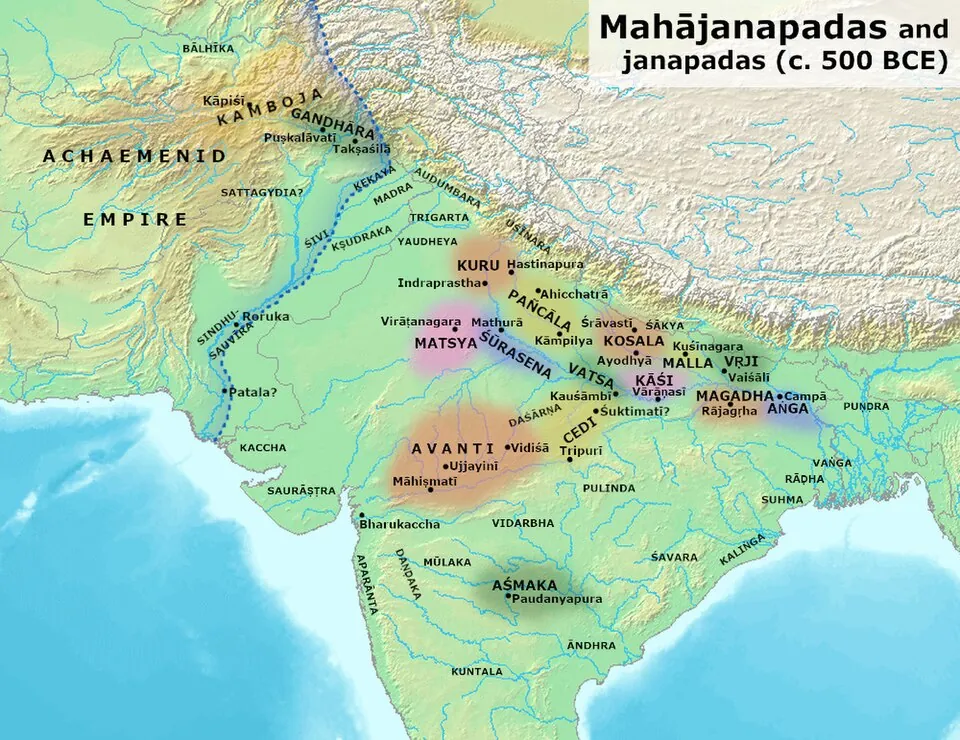
Persian Armies Reach the Indus
From about 535 BCE the Achaemenid Persians under Cyrus began absorbing lands west of the Indus, and around 518 BCE Darius pushed on to the Jhelum. The Behistun Inscription supplies the first firm evidence, and Gandāra, Hindush and Sattagydia became provinces of the empire.
Cyrus the Great, the Persian king, began in about 535 BCE a long campaign to bring parts of northwestern South Asia into his new Achaemenid Empire, first annexing a wide region west of the Indus. After a pause following his death around 530 BCE, Darius the Great resumed the effort, recovering lost provinces and extending Persian power. Around 518 BCE his forces advanced across the Indus and took lands as far as the Jhelum river in what is now western Punjab. The first reliable written evidence is the Behistun Inscription, which points to a date at or shortly before 518 BCE. Persian expansion came in stages, beginning in the north of the Indus basin and moving south. Achaemenid inscriptions name three provinces covering the region: Gandāra, Hindush and Sattagydia. At its height the empire held much of present-day Pakistan. Persian authority faded over later generations and formally ended when Alexander the Great overthrew the Persian empire. The episode brought administrative, scribal and cultural contacts between the Iranian world and northwestern India.
Sources
- Achaemenid conquest of the Indus Valley Wikipedia · CC-BY-SA-4.0
- Q16001607 Wikidata · CC0-1.0