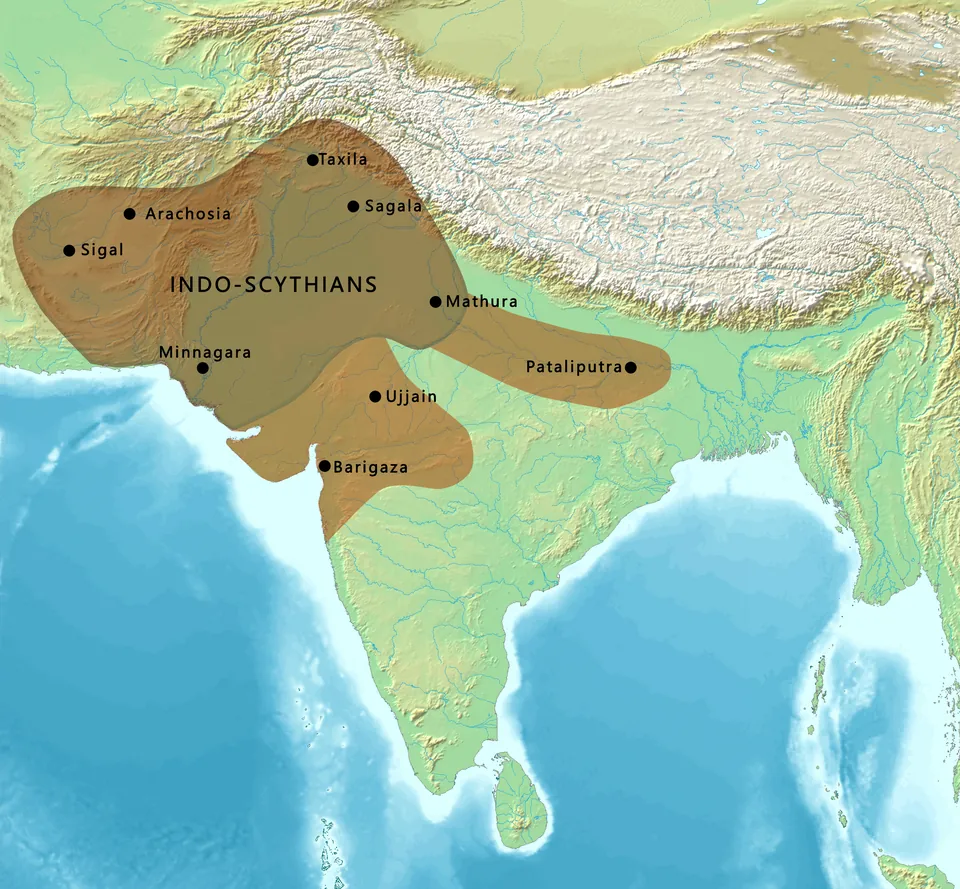
The Indo-Scythians Settle the North-West
From the mid-second century BCE, nomadic Saka groups of Iranic origin moved south into Afghanistan and the north-western subcontinent. Under kings such as Maues they took power in Gandhāra and the Indus Valley, displacing Indo-Greek rulers and shaping regional politics for centuries.
The Indo-Scythians, also called Indo-Sakas, descended from Iranic nomads of the Central Asian steppe. Pressed by shifting populations, they moved south over a long period, across roughly five centuries, beginning near 150 BCE and lasting into the 300s CE, into present-day Afghanistan, eastern Iran, Pakistan and northern India. The first Saka king recorded in the subcontinent is Maues, active in the first century BCE, who established authority in Gandhāra and along the Indus. His successors, including Azes, took over territory from the Indo-Greeks, and Saka governors, the satraps of Mathurā and Western India, kept their power for generations. The Western Kṣatrapas of Ujjain, notable patrons of early inscriptions in Sanskrit, are a late branch of this movement. Coins, rock edicts and Buddhist dedications show a ruling class that adopted Indian religion, language and titles while retaining some steppe customs. Their rule reshaped the political map before the Kuṣāṇas and the Guptas, and it connected the subcontinent more closely to Central Asian trade. The date here marks the approximate start of Saka kingship under Maues.
Sources
- Indo-Scythian Kingdom Wikipedia · CC-BY-SA-4.0
- Q240123 Wikidata · CC0-1.0