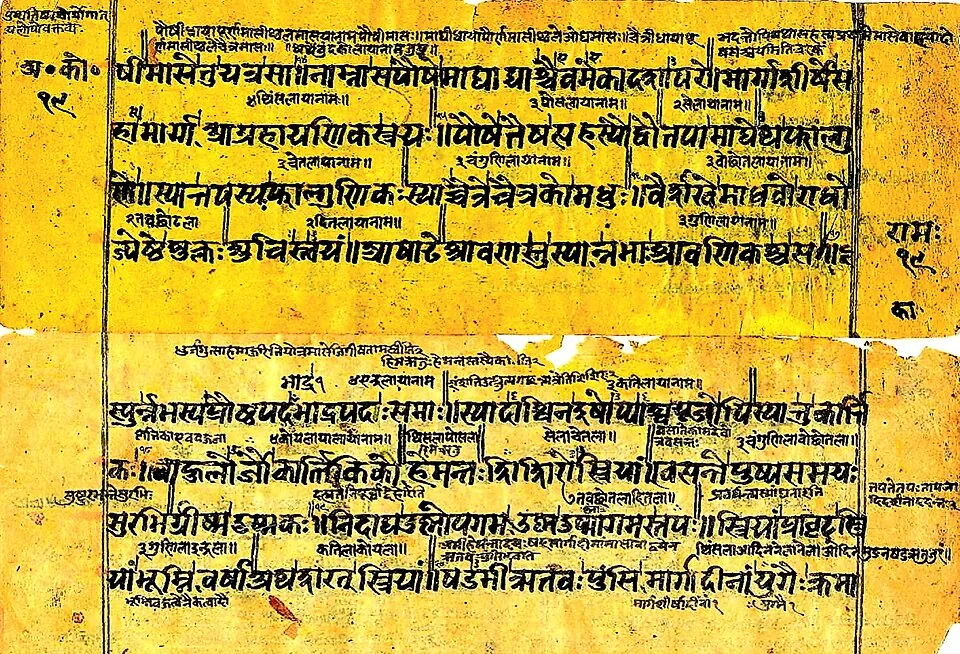
The Amarakośa, a Sanskrit Thesaurus by Amarasiṃha
Amarakośa · अमरकोश
The Amarakośa, formally the Nāmaliṅgānuśāsana, is a Sanskrit thesaurus by Amarasiṃha, probably of about the sixth century. It is one of the oldest surviving Sanskrit lexicons, and more than forty commentaries show how widely it was studied. Pupils memorised its verses for centuries.
The Amarakośa, whose proper title is Nāmaliṅgānuśāsana, meaning instruction on nouns and gender, is a Sanskrit thesaurus compiled by the scholar Amarasiṃha. The popular name joins amara, immortal, with kośa, treasury, and the work is organised by subject so that students can find synonyms for a given thing. The scholar A. B. Keith counted it among the oldest surviving Sanskrit lexicons, and he suggested that Amarasiṃha probably lived in the sixth century and was familiar both with Mahāyāna Buddhism and with the poet Kālidāsa. Amarasiṃha himself cites eighteen earlier dictionaries, though none of them survives, which means that his work stands at the head of the preserved tradition. Over forty commentaries have been written on it, and for centuries pupils in India memorised its verses as a standard part of their education. The chosen year is a rough scholarly marker, because the author's dates rest on indirect evidence. The text remains a handy guide to classical Sanskrit vocabulary and a useful window into the learned world of the Gupta age.
Sources
- Amarakosha Wikipedia · CC-BY-SA-4.0
- Q2603184 Wikidata · CC0-1.0