Kālidāsa's Meghadūta, the Cloud Messenger
Meghadūta · मेघदूतम्
The Meghadūta, attributed to Kālidāsa around the 4th to 5th century CE, is a Sanskrit lyric poem in which an exiled yakṣa asks a passing cloud to carry a message of love to his wife. It is regarded as a masterpiece and inspired a whole genre of messenger poems.
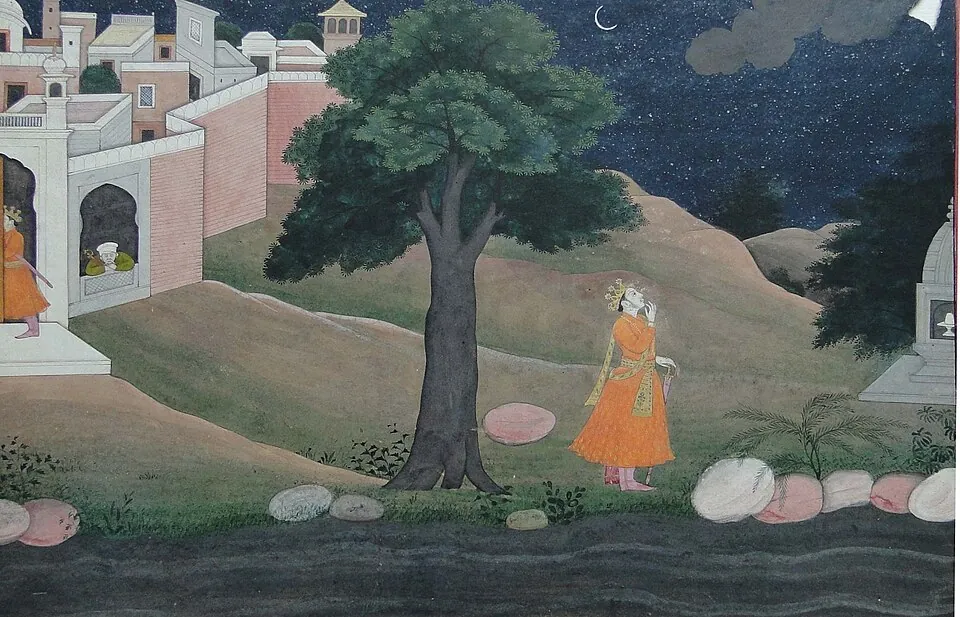
The Meghadūta, whose title means the Cloud Messenger, is a Sanskrit lyric poem ascribed to Kālidāsa, considered one of the greatest poets of classical Sanskrit and usually placed in the fourth or fifth century CE. Its premise is simple and affecting. A yakṣa, a nature spirit in the service of Kubera, has been banished by his master for a year to a remote hill. As the monsoon arrives, he addresses a cloud and begs it to carry word of his love to his wife, far away in the Himalayan city of Alakā. The poem describes the cloud's journey across the land, with its rivers, hills, cities and gardens, and then the wife's longing. Admired for its imagery and its control of the slow mandākrāntā metre, it was widely read and commented upon. It gave rise to the genre of sandeśa kāvya, or messenger poems, in many Indian languages, and was especially cherished in Bengali literature. A later Sanskrit sequel, the Ghanavṛtta by Korada Rāmacandra Śāstrī, shows how the form continues.