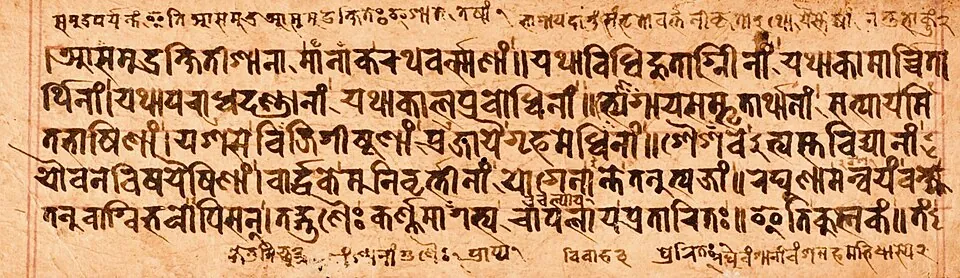
Kālidāsa's Raghuvaṃśa, Epic of the Raghu Line
Raghuvaṃśa · रघुवंश
The Raghuvaṃśa is a Sanskrit mahākāvya by the poet Kālidāsa, usually placed in the fifth century CE during the Gupta age. In nineteen cantos it follows the solar dynasty from Dilīpa through Raghu and Daśaratha to Rāma and finally Agnivarṇa, and it has been studied ever since.
The Raghuvaṃśa, 'Lineage of Raghu', is a Sanskrit mahākāvya, or court epic, by Kālidāsa, the most celebrated of classical Sanskrit poets. Its exact date of composition is not recorded, but he is presumed to have flourished in the fifth century CE, in the Gupta age. The poem runs to nineteen sargas, or cantos, and traces a royal family from Dilīpa and his descendants down to Agnivarṇa, taking in Raghu, Daśaratha and Rāma along the way. Because it retells the Rāmāyaṇa within a longer dynastic sweep, it presents the story as a chain of exemplary and flawed kings rather than as one hero's tale. The oldest commentary to survive is by Vallabhadeva, a Kashmiri scholar of the tenth century, and the most widely read is the Sañjīvanī by Mallinātha, who lived around 1350 to 1450. The work has been studied and taught for centuries as a model of refined style and of the poet's gift for imagery and measured emotion.
Sources
- Raghuvaṃśa Wikipedia · CC-BY-SA-4.0
- Q2046254 Wikidata · CC0-1.0