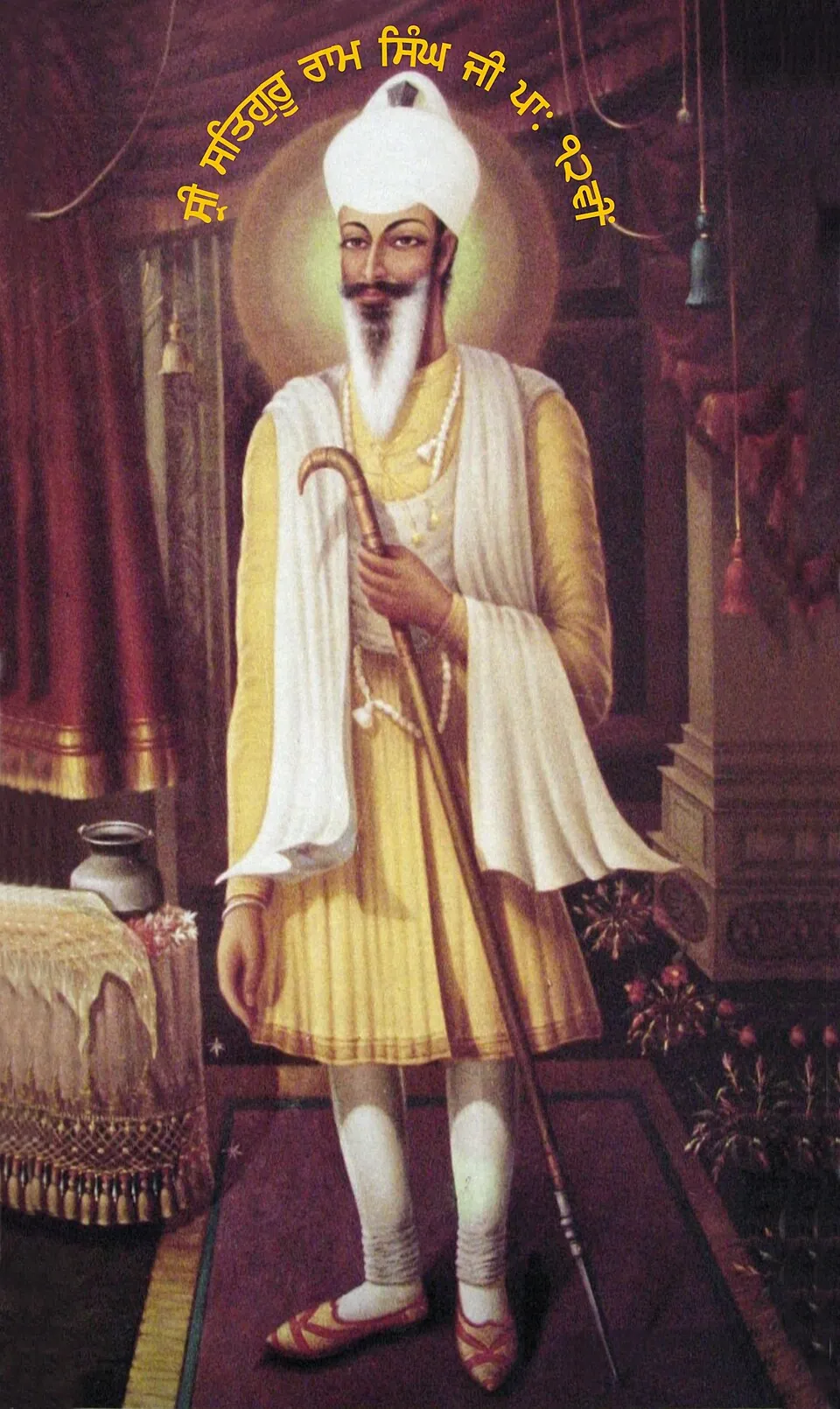
Baba Ram Singh Exiled to Rangoon
Baba Ram Singh, regarded by the Namdhari sect as its twelfth guru, was exiled by the British to Rangoon in January 1872. Credited as an early Indian champion of refusing to cooperate with British rule and of boycotting its goods and services, he later became a national figure of commemoration.
Ram Singh, born in 1816, led the Namdhari or Kuka movement in Punjab. His followers revere him as the twelfth guru, whereas mainstream Sikh groups such as the Damdami Taksal and the Nihangs see him as a saint instead. He is credited as the first Indian to use withdrawal of cooperation, and shunning of British products and services, as political weapons. After a violent clash involving his followers in 1872, the colonial administration sent him into exile in Rangoon, Burma, on 18 January 1872, and he never returned to Punjab; he lived on in confinement until 1885. His memory has endured. In 2016 the Government of India decided to mark the two hundredth anniversary of his birth, the Punjab government holds state-level functions each year on his birth anniversary and has declared a holiday, and his portrait hangs in the Indian Parliament and at the Ludhiana railway station.
Sources
- Satguru Ram Singh Wikipedia · CC-BY-SA-4.0
- Q7288592 Wikidata · CC0-1.0