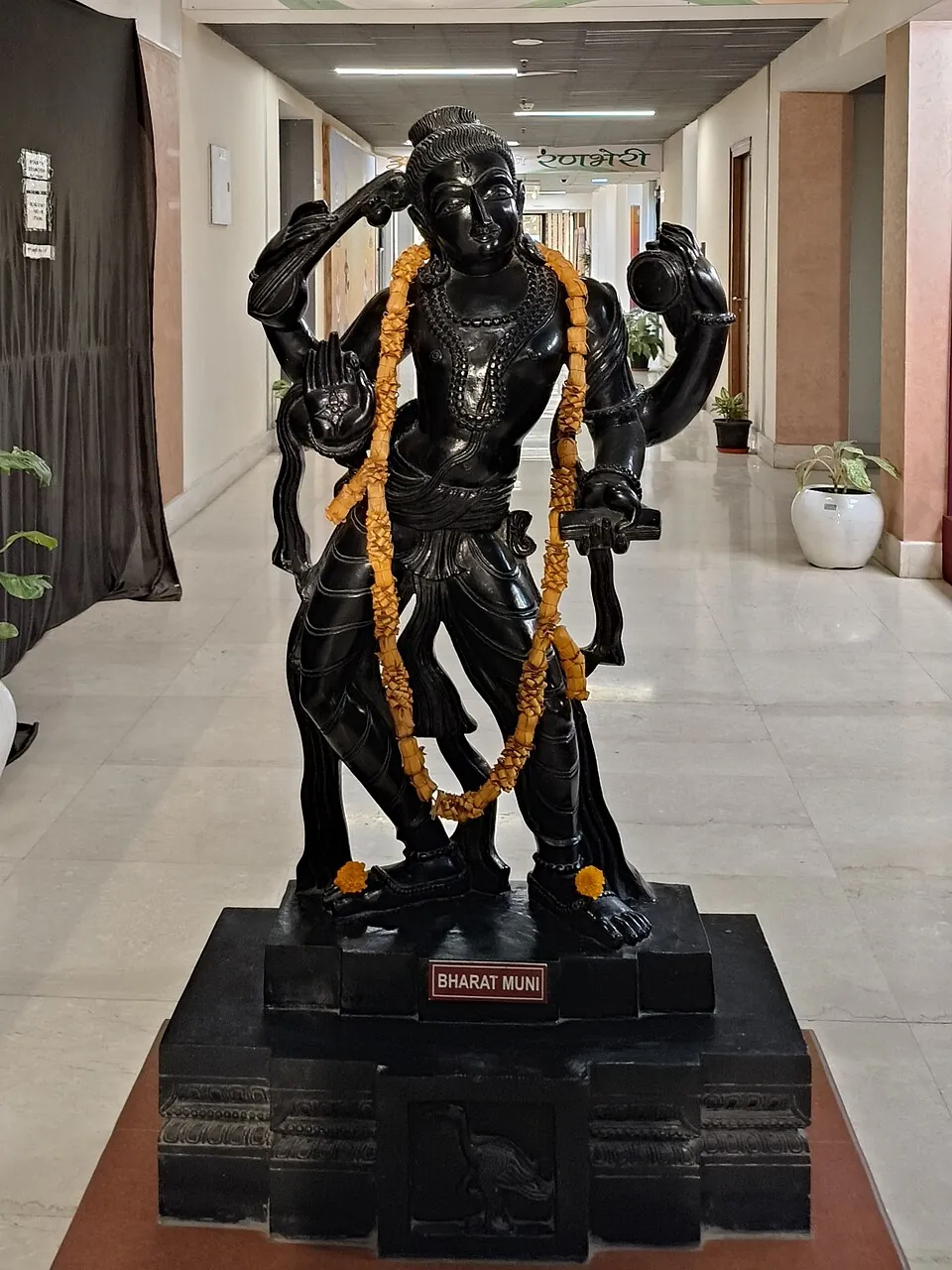
Bharata Muni and the Nāṭyaśāstra
Bharata Muni · भरत मुनि
Bharata Muni is traditionally credited as the author of the Nāṭyaśāstra, the great Sanskrit treatise on drama, dance, poetics and music. Scholars treat it as a composite work from the last centuries BCE to early centuries CE, and the sage's own dates remain uncertain.
Bharata was a sage of ancient India, and tradition ascribes to him the Nāṭyaśāstra, one of the most influential works on the performing arts. The treatise covers dramaturgy, dance, poetics and music, and it laid the foundations for later Indian thinking about aesthetic experience, including the doctrine of rasa, the emotional flavour that a performance evokes in an audience. Nothing certain is known about Bharata as a person, and many scholars consider the work a layered compilation produced over several generations rather than a single author's text. The span usually offered for it runs from roughly the second century BCE to the second century CE, although estimates differ and some range wider. Later Sanskrit dramatists, theorists such as Abhinavagupta, and the classical dance traditions of India all draw on its vocabulary and rules. The year shown is a scholarly midpoint offered for convenience; it should be understood as a broad, approximate dating tied to the text's likely formation, not as the birth or death of an individual.
Sources
- Bharata (sage) Wikipedia · CC-BY-SA-4.0
- Q196831 Wikidata · CC0-1.0