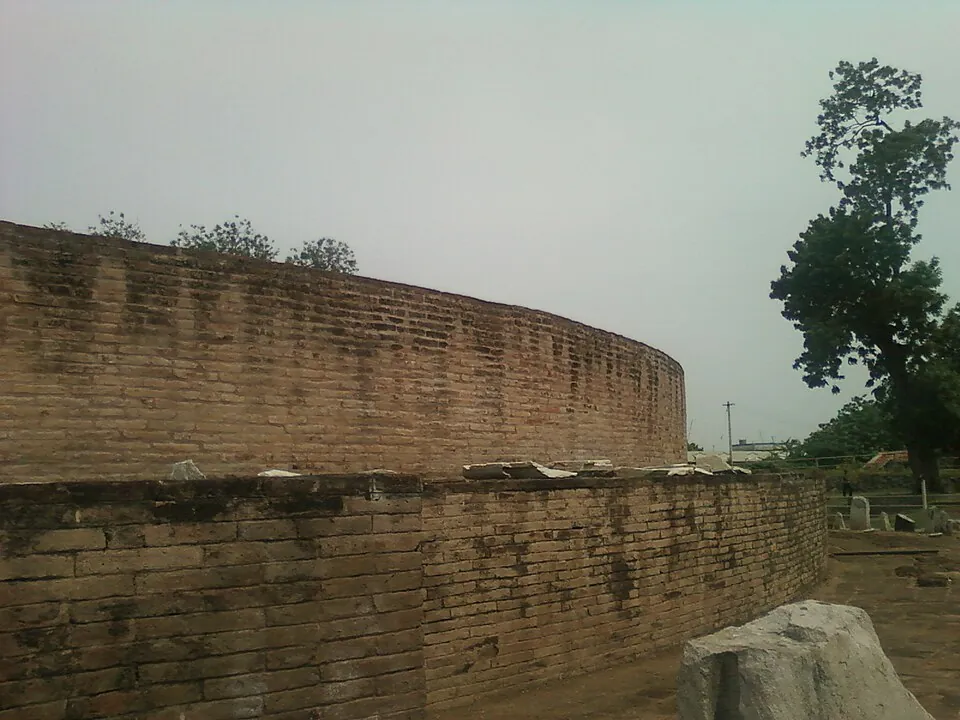
The Great Stūpa of Amarāvatī
Amarāvatī Stūpa · अमरावती स्तूप
Built in phases from about the third century BCE to roughly 250 CE in what is now Andhra Pradesh, the Amarāvatī stūpa is famed for its relief sculpture. Its Andhra style stands beside the Mathura and Gandhāra schools and influenced South and Southeast Asian art.
The Buddhist stūpa at Amarāvatī, in Palnadu district of Andhra Pradesh, grew over several centuries, with construction probably running from the third century BCE to about 250 CE. From around 50 CE the monument was enlarged and new sculpted panels replaced older ones. Today the stūpa is a ruin guarded by the Archaeological Survey of India and flanked by a site museum. Most of its surviving art is carved in relief, and although it once held very large images of the Buddha, few remain. The best groups of Amarāvatī sculpture are kept in the Government Museum in Chennai, the Amaravati Archaeological Museum and the British Museum in London, and many pieces are damaged. Art historians count the Amarāvatī, or Andhra, school as one of three major styles of ancient Indian art, alongside Mathura and Gandhāra. Maritime trade along the eastern coast carried its influence to South India, Sri Lanka and Southeast Asia. Its reliefs often show the stūpa itself, offering rare evidence of how such monuments originally looked.
Sources
- Amaravati Stupa Wikipedia · CC-BY-SA-4.0
- Q17351111 Wikidata · CC0-1.0