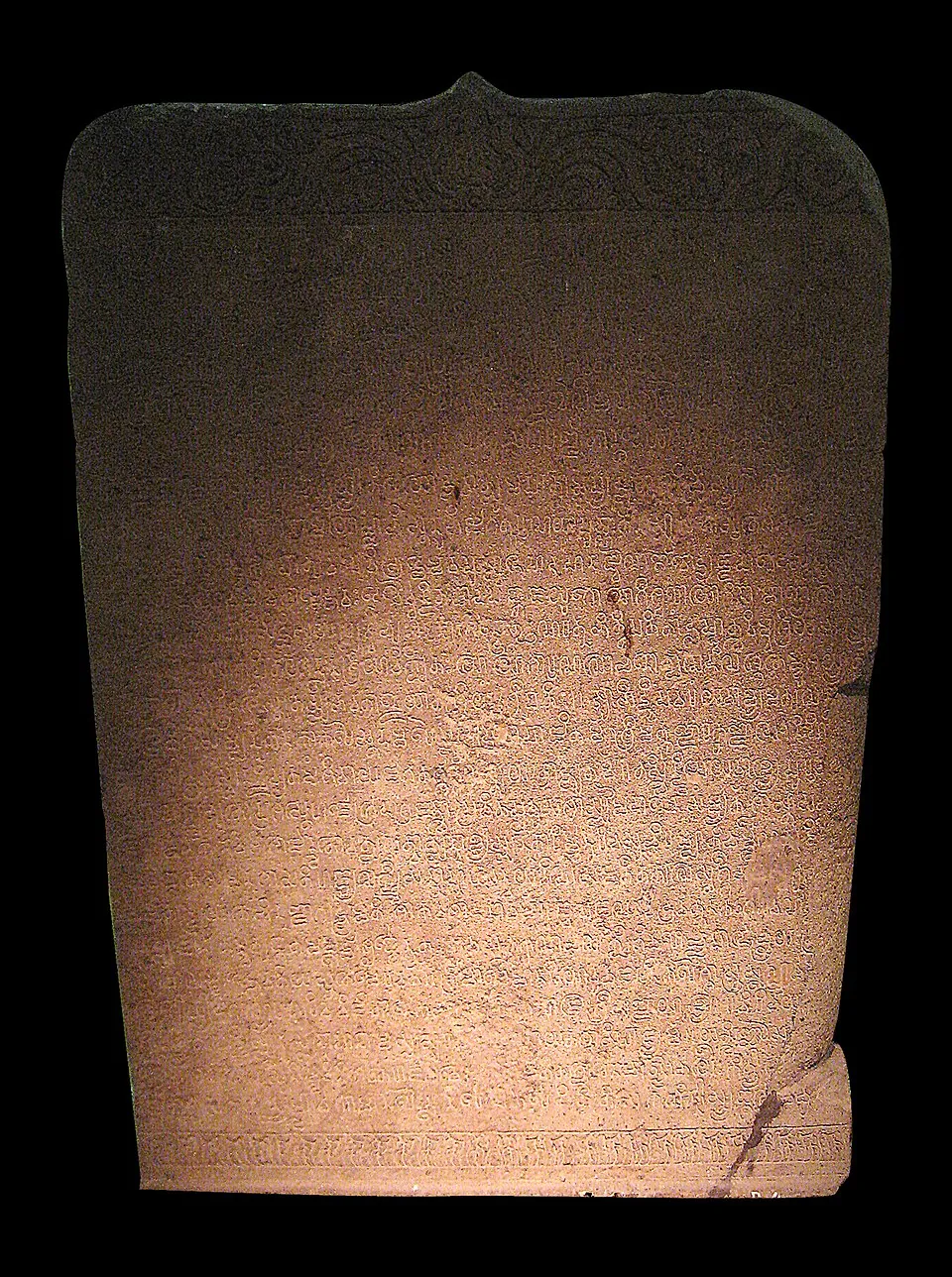
Canggal Inscription Proclaims Sañjaya King of Mataram
The Canggal inscription, a Sanskrit record dated 732 CE and found at Gunung Wukir in Central Java, announces that Sañjaya had become sovereign of the whole Mataram realm. It is written in a Pallava-derived script and begins by honouring Śiva.
The Canggal inscription is a Sanskrit text dated to 732 CE, discovered in the Gunung Wukir temple complex at Kadiluwih village in Salam, Magelang Regency, Central Java. It is written in the Pallava alphabet, which came to Indonesia from southern India. The record preserves a decree of Sañjaya, who here proclaims himself sovereign over the whole Mataram realm. It also reports the installation of a liṅga on a hill, an act of devotion to Śiva that shows the strength of Śaiva religion in early Javanese courts, and it praises the island of Java as rich in rice and gold. Sañjaya is considered the founder of the first Mataram dynasty, and the inscription is the earliest firm evidence for Hindu kingship in Central Java. Its date is given in the Śaka era, corresponding to October 732 in the Gregorian calendar. The inscription therefore shows both a political claim and the adoption of Sanskrit and Indian religious forms, which formed the basis for the later monuments of the Kedu and Prambanan plains. Later Javanese sources such as the Carita Parahyangan also mention a king named Sañjaya.
Sources
- Canggal inscription Wikipedia · CC-BY-SA-4.0
- Q1874533 Wikidata · CC0-1.0