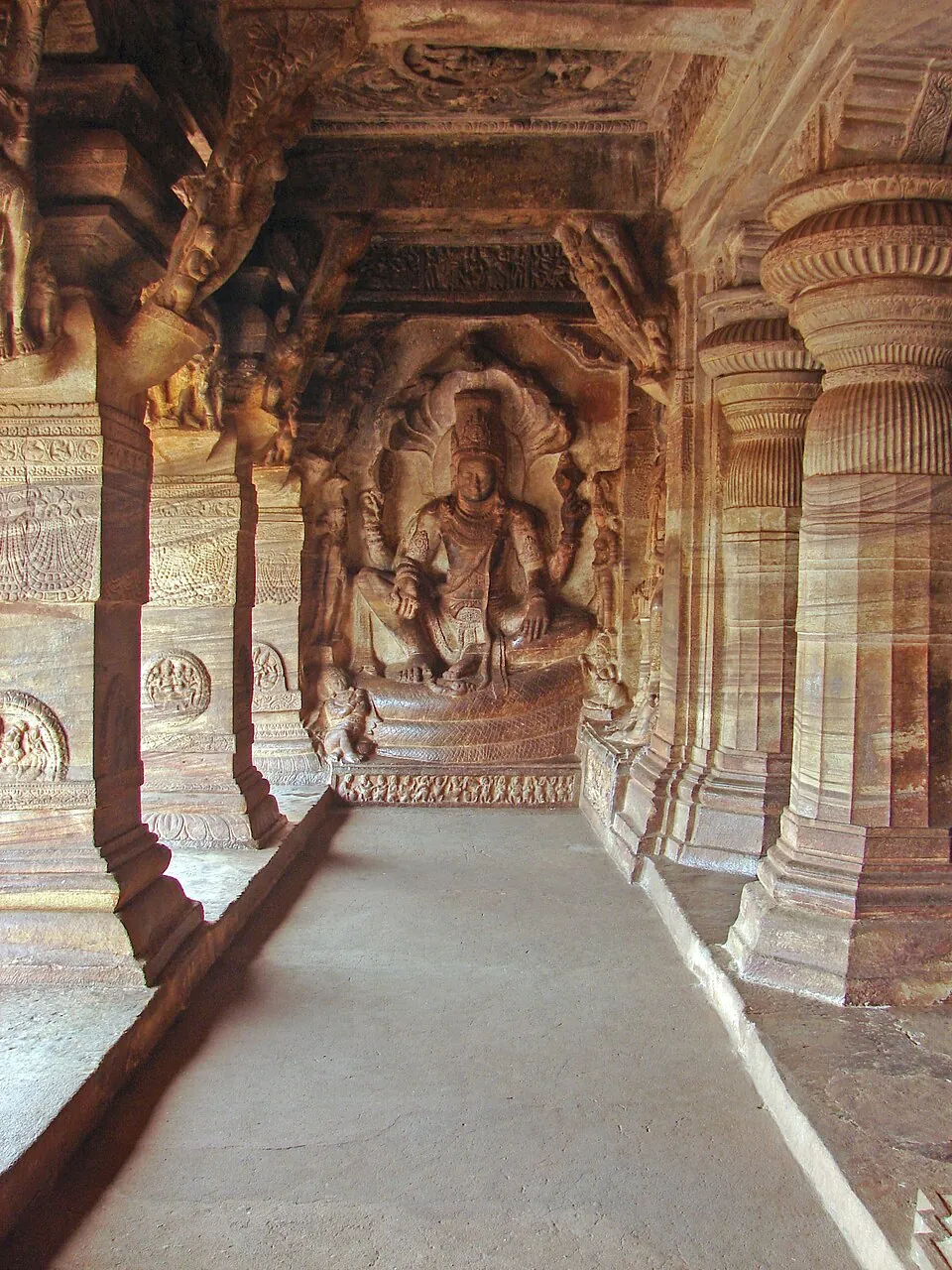
Vikramāditya II Takes Kāñcī Three Times
Vikramāditya II · विक्रमादित्य द्वितीय
Vikramāditya II ruled the Bādāmi Chalukya realm from 733 to 744 CE. Inscriptions say he captured the Pallava capital Kāñcīpuram three times, and his queens consecrated the Virūpākṣa and Mallikārjuna temples at Paṭṭadakal, the centrepiece of a World Heritage site.
Vikramāditya II, son of Vijayāditya, took the Bādāmi Chalukya throne on his father's death and ruled from 733 to 744 CE. A Kannada inscription at Lakṣmēśvara dated January 735 supplies this information. Even as crown prince he led successful campaigns against the Chalukyas' long-time rivals, the Pallavas of Kāñcīpuram. His most famous achievement was capturing Kāñcī on three occasions: first as prince, again as emperor, and a third time under his son and heir Kīrtivarman II. A Kannada inscription at the Virūpākṣa temple praises him as conqueror of Kāñcī three times. Another lasting accomplishment was the consecration of the Virūpākṣa, or Lokeśvara, temple and the Mallikārjuna, or Trailokyeśvara, temple at Paṭṭadakal by his queens Lokamahādevī and Trailokyamahādevī. Together these monuments form the core of the UNESCO World Heritage listing for Paṭṭadakal. Inscriptions describe him as a strong ruler, and the temples remain among the finest surviving examples of early Deccan architecture, mixing northern and southern styles of building.
Sources
- Vikramaditya II Wikipedia · CC-BY-SA-4.0
- Q5477720 Wikidata · CC0-1.0