Pattadakal, Where Northern and Southern Temple Styles Meet
Paṭṭadakal · पट्टदकल
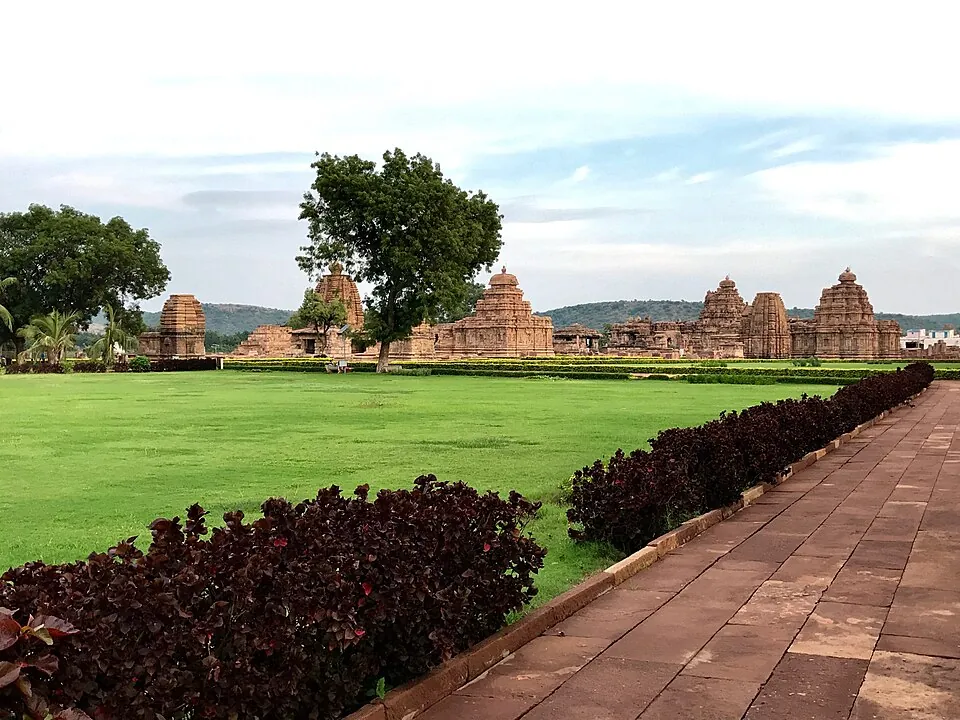
Pattadakal in northern Karnataka is a complex of seventh and eighth century Hindu and Jain temples built under the Chalukyas, now a UNESCO World Heritage Site. It blends northern and southern architectural forms, with the Virupaksha and Papanatha temples among its most refined buildings.
Pattadakal, also called Raktapura, lies beside the Malaprabha river, on its western side, in Bagalkot district, close to the Chalukya centres of Badami and Aihole. Its temples, built in the seventh and eighth centuries CE, are mostly Hindu and dedicated generally to Śiva, though Vaiṣṇava and Śākta elements also appear, and there is one Jain shrine to a single Jina. UNESCO inscribed the site and praised it as an harmonious meeting of building traditions from the north and the south of India. Friezes on the temples show Vedic and Purāṇic ideas and scenes from the Rāmāyaṇa, the Mahābhārata and the Bhāgavata Purāṇa, as well as episodes drawn from works such as the Pañcatantra and the Kirātārjunīya. The Pāpanātha and Virūpākṣa temples are the most sophisticated, with detailed friezes and a merging of northern and southern idioms, and the Virūpākṣa temple remains an active place of worship. Today the Archaeological Survey of India manages the monuments, which are protected under Indian law. The Malaprabha valley has long held importance in the history of South India.
Sources
- Pattadakal Wikipedia · CC-BY-SA-4.0
- Q817250 Wikidata · CC0-1.0